Functional Is Not a Position: Lessons from UK Wellness Retail
What UK wellness retail reveals about clarity, private label, claims and the next challenge for functional CPG.
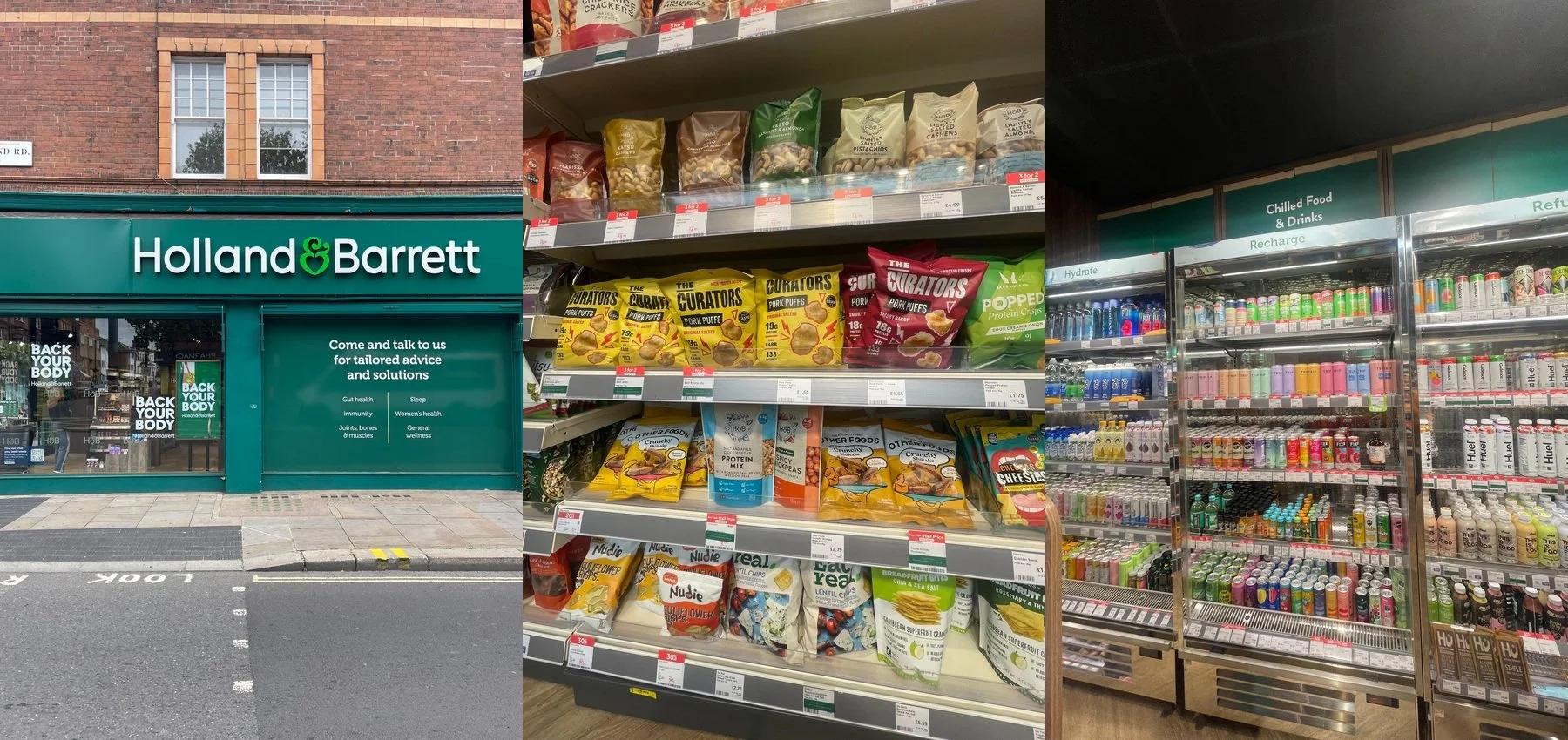
The first thing that struck me on my most recent visit to UK retail was not any single product. It was how many different wellness problems were being solved at once, often on the same shelf and often with overlapping language. Protein, fiber, gut health, brain health, sleep and immunity now show up across snacks, dairy, beverages and supplements. The shopper is left to decide which benefit matters, which feels credible and which is worth paying for.
A caveat first: a limited number of store visits cannot define a retailer’s strategy or represent the whole UK market. What follows is what I noticed in-market, what I think those observations signal, and what I believe CPG leaders should consider.
A market where every shopper is solving a different problem
The UK is a useful place to study wellness because the consumer is not one consumer. London makes that especially visible. The city’s demographic diversity means retailers and brands are serving different ages, cultural backgrounds, lifestyles and health priorities at the same time. Those needs are not interchangeable.
Nutrition adds another layer. UK public-health reporting points to gaps around nutrients such as vitamin D, iron and certain B vitamins, while consumers are simultaneously seeking more aspirational benefits: protein, fiber, gut and brain support, better sleep and everyday energy. Wellness is therefore not only about correcting a deficiency. It is also about helping people perform, recover and feel better within a busy life.
That is where the commercial tension begins. Consumers may want more wellness solutions, but they still operate with finite budgets, time and attention. My read is that the wellness basket can expand only so far before people start consolidating needs, trading down or questioning whether another functional product is really necessary.
Wellness is becoming a system, not an aisle
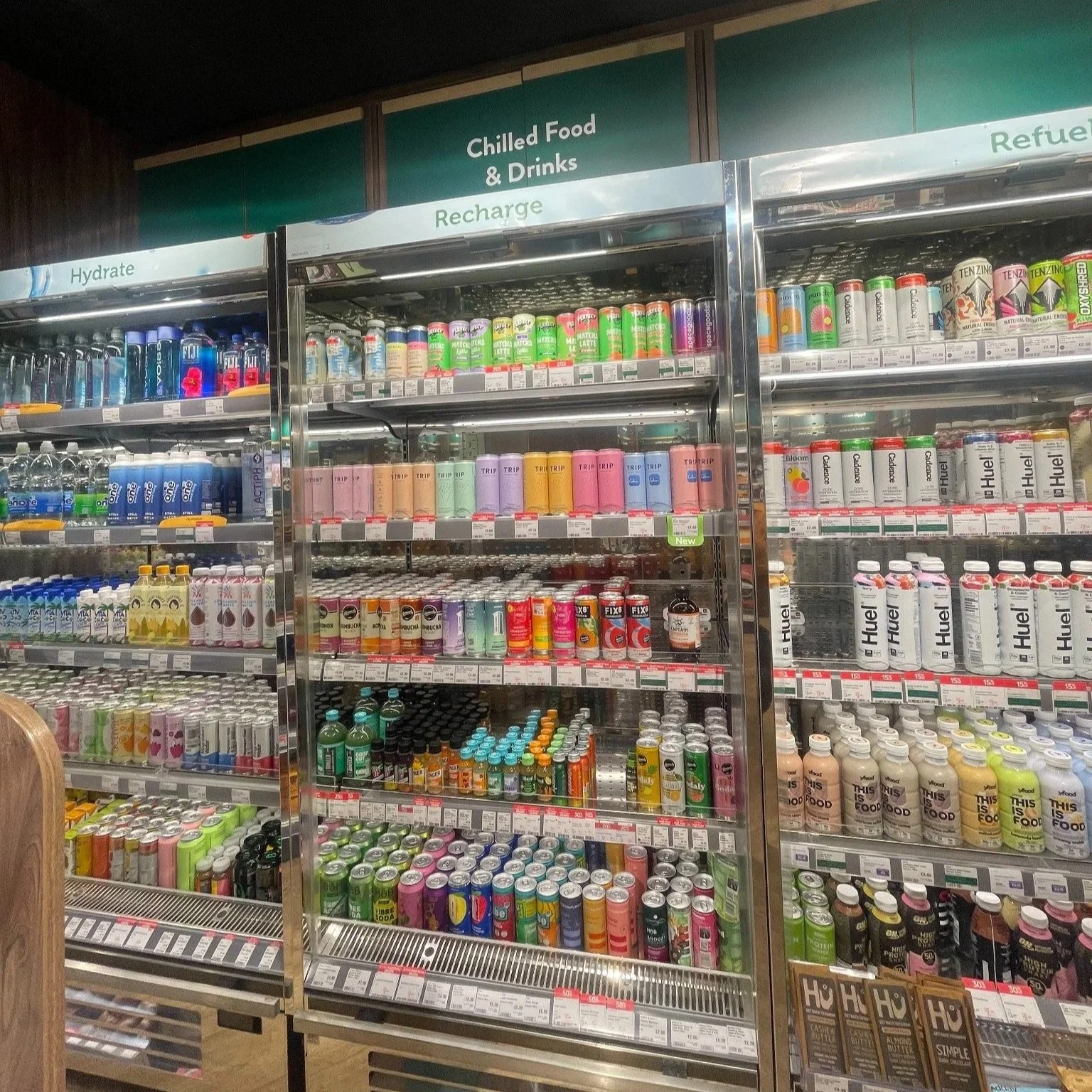
Holland & Barrett was one of the clearest expressions of this shift in the stores I visited. The experience stretches from healthy snacking to targeted solutions for joints, hair, collagen, digestion and eye health, with vitamins and beverages organised around needs such as hydrate, fuel, recharge and restore.
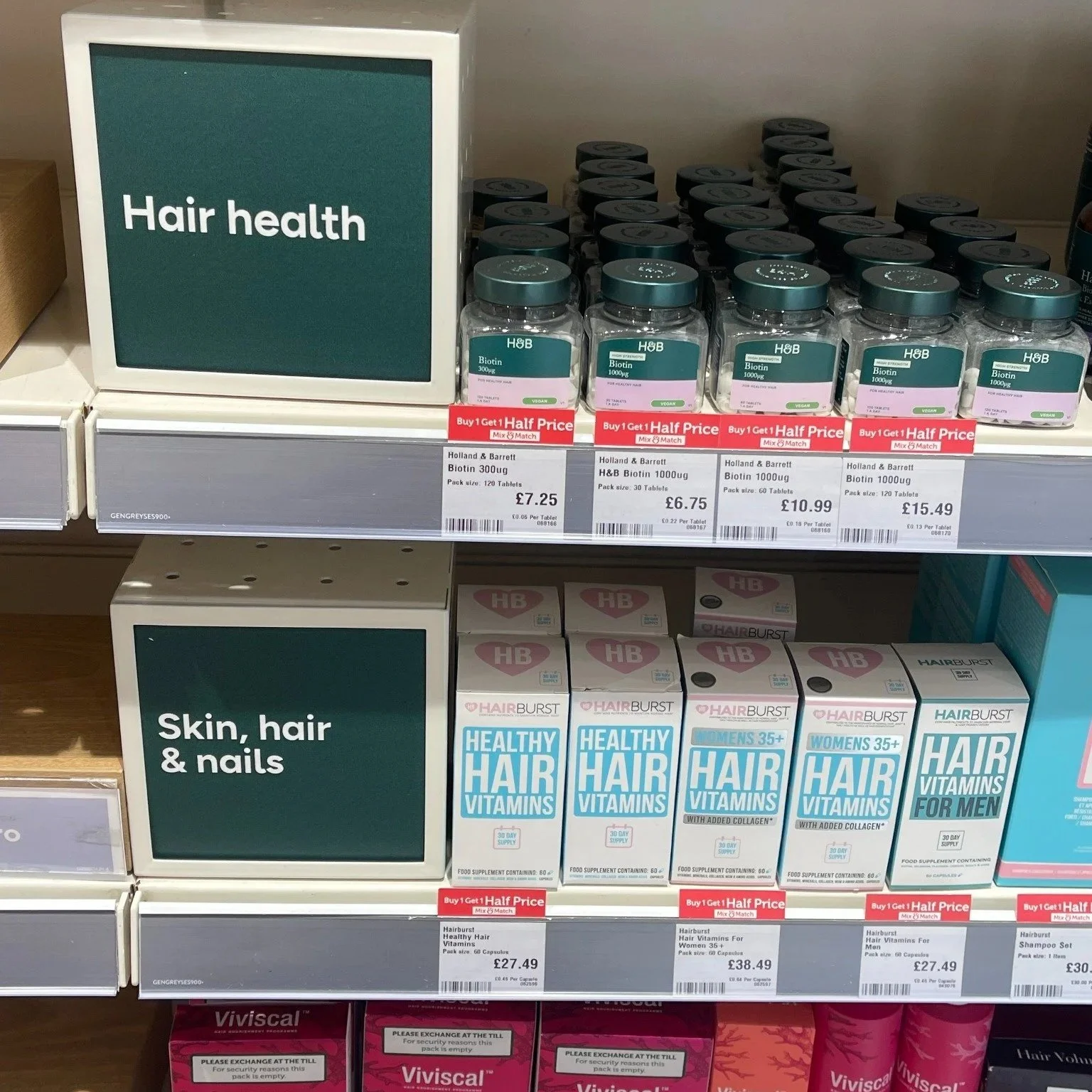
I was also struck by what I think of as “secondary raw foods”: nuts, honey, dark chocolate and broth sitting inside a broader wellness logic around inflammation, muscle, beauty and recovery. The opportunity is not simply to sell supplements. It is to help consumers navigate a connected system of needs.
That same logic is increasingly visible in grocery. At M&S, wellness language appears directly in food: nutrient density, protein call-outs and functional cues are integrated into everyday categories. In beverages, I saw cold-pressed juices, matcha, kombucha, kefir and fermented shots presented through benefits such as antioxidants and gut health. Waitrose showed a different balance, mixing mainstream brands and private label while making clean-label, allergen-aware and functional choices easier to find.
The important point is not that every retailer is following the same strategy. They are not. It is that wellness is moving through the store rather than sitting neatly inside one destination.
When functionality spreads, differentiation gets harder
One pattern stood out across these visits: benefits such as protein, gut health, fiber, creatine and immunity are no longer confined to one obvious category. They appear across beverages, dairy, snacks, supplements and private label. The traditional soda set, for example, now competes with a growing range of no-sugar and prebiotic propositions. In yoghurt, an old cue such as “0% fat” competes for attention with protein and other functional benefits.
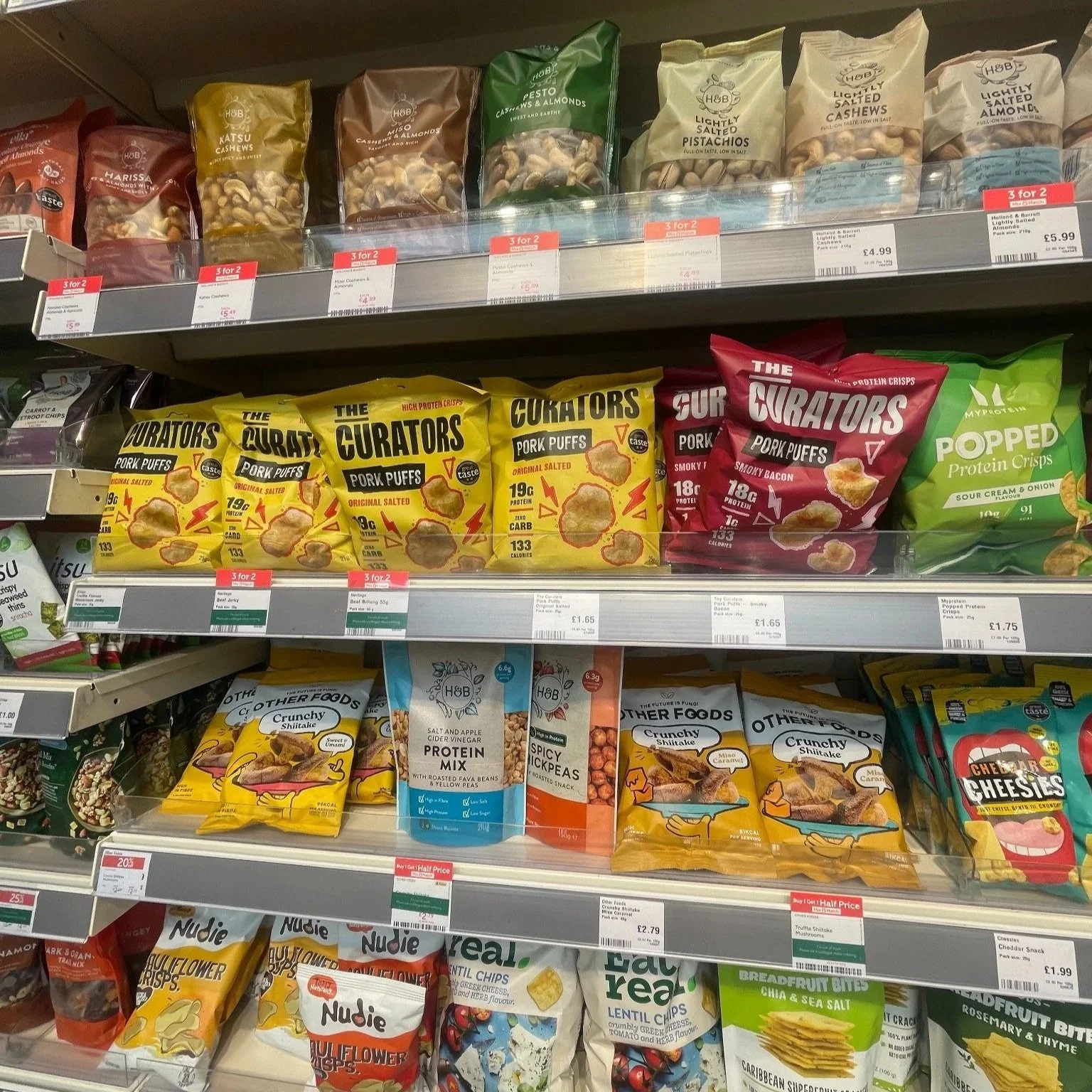
Healthy snacking shows the same evolution. I saw nut mixes framed around brain health, date-based products carrying collagen cues, and dark chocolate paired with ingredients that already carry a wellness halo. Retailers are not just merchandising “better-for-you” products; in some cases, they are building their own interpretation of what modern wellness should look like.
For branded CPG, that creates pressure. If a retailer can credibly deliver protein, gut health or functional snacking under its own name, “functional” alone is not much of a position. It is increasingly a product attribute that still needs a distinctive consumer territory around it.
I also expect some rationalisation. When benefits overlap, shelves get crowded and the consumer’s total wellness spend remains constrained, weaker propositions become harder to defend. More functionality does not automatically create more value.
STRATEGIC IMPLICATION
If private label can deliver the functional benefit, the brand still needs a reason to exist beyond the benefit.
What clarity looks like on the shelf
Huel stood out to me because the proposition remained easy to understand across retail, specialist and convenience environments. The territory stays consistent: meal replacement and complete nutrition, with protein, fiber, vitamins and minerals made highly visible. The execution may adapt by market, but the job the brand is trying to do remains clear. That consistency matters more than simply adding another functional claim.
I saw a similar lesson in gut health. In the stores I visited, kefir and kombucha made the benefit especially easy to understand because the format itself has become strongly associated with the need. That does not mean they “own” the market in a quantitative sense. It means the connection between product, format and benefit felt unusually immediate.
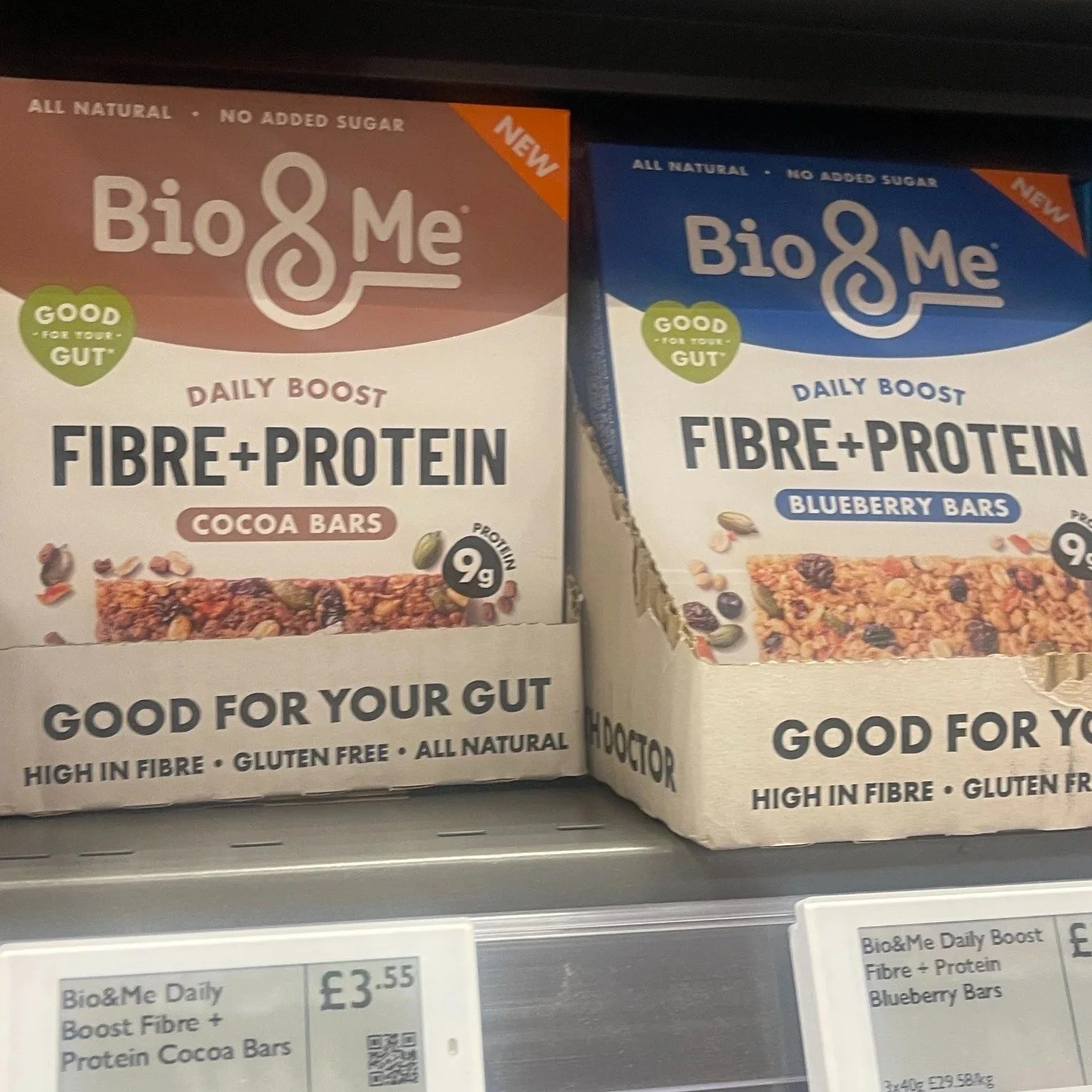
Then there is taste. Wellness can earn trial through a claim, but repeat purchase still has to survive the eating or drinking experience. Taste is not the reward after strategy; it is part of the strategy.
The other decision layer is packaging. At shelf, people still see the pack first. But consumers can also ask an AI assistant to compare two products in seconds. That means the brand benefit has to be legible in both places: visually on pack and consistently across the digital information a machine may retrieve. Treating those as separate communication jobs creates another opportunity for confusion.
Taste is not the reward after strategy. It is part of the strategy. - Javier Andino
A claim that works in the US may not travel intact
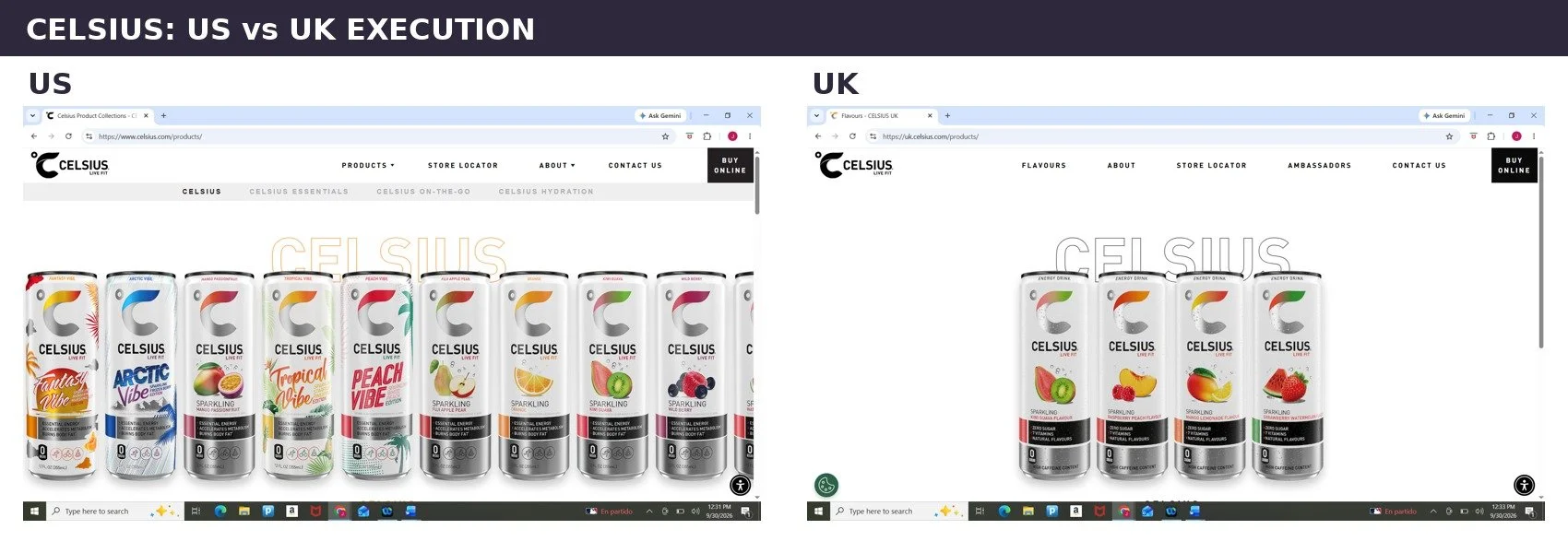
For US brands considering Great Britain, claims are not simply a translation exercise. Great Britain maintains an authorised register for nutrition and health claims, so market entry has to consider what can legally be said as well as what will resonate. Celsius makes the commercial tension visible: in the US execution Javier reviewed, metabolism and body-fat language is prominent; in the UK execution he reviewed, that language is not presented with the same prominence. The images do not prove regulation is the only reason for the difference, but they do show how a proposition can land differently from one market to another.
The strategic question is bigger than wording: does the positioning still hold when a high-impact claim becomes less central? Brands built around a clear consumer territory, format, taste experience and brand system have more to carry across borders than brands that depend heavily on one functional promise. Huel is a useful contrast: its meal-replacement territory remains recognisable even when the assortment or execution changes. Market entry should therefore pressure-test positioning and permissible claims together, not one after the other.
What CPG leaders should take from this
For retailers, the challenge is portfolio clarity: what wellness needs the assortment is designed to serve, which products genuinely add something and how the total offer stays navigable.
For brands, I would reduce the lesson to four decisions. First, choose the consumer territory before stacking benefits. A long list of functions can make a product sound impressive while making the brand harder to remember. Functionality can help earn attention, but it cannot substitute for systematic brand building.
Second, pressure-test the claim before entering a market. Understand what you can actually say and ask whether the proposition remains compelling when the wording becomes more conservative.
Third, design for both decision layers. The pack should make the core benefit and taste expectation easy to grasp at shelf; the digital ecosystem should explain the same proposition consistently when consumers compare products online or through AI.
Fourth, be realistic about the wellness basket. Consumers are not buying only wellness. When several products promise similar outcomes, price and perceived differentiation become harder to separate.
Sense and sensibility
The UK wellness market I observed is dynamic, diverse and, at times, overwhelming. Consumers want solutions. Retailers are giving them more. Private label is becoming more sophisticated. Functional benefits are travelling across categories. At the same time, shoppers still have limited money, attention and time.
That is why I do not think the next advantage necessarily comes from adding another benefit to the front of the pack. It may come from making the product easier to understand: what it does, who it is for, why it is different and why someone would want to buy it again. Performance can accelerate demand, but it cannot create durable equity on its own. In wellness, short-term activation and long-term brand building have to reinforce each other.
In a market full of functionality, clarity is not the opposite of innovation. It is what helps innovation make sense.

About the author:
Javier Andino is a Fractional CMO & LATAM Lead at átomos with more than 20 years of CPG marketing experience across Kraft Heinz, Nestlé and General Mills. He has built and revitalized brands across Mexico, Central America and the U.S., combining consumer strategy, retail and foodservice experience with a multicultural perspective on how brands grow across markets.
ÁTOMOS — FRACTIONAL CMO FOR FOOD & BEVERAGE
We bring big-CPG playbooks to growing food and beverage brands.
We embed inside your business, read your category the way large CPG does, and help you move with clarity and speed — without the full-time cost.
→ Let's talk: atomos.us/contact