
GLP-1 Is Rewriting the Eating Occasion: What Food & Beverage Brands Need to Reassess
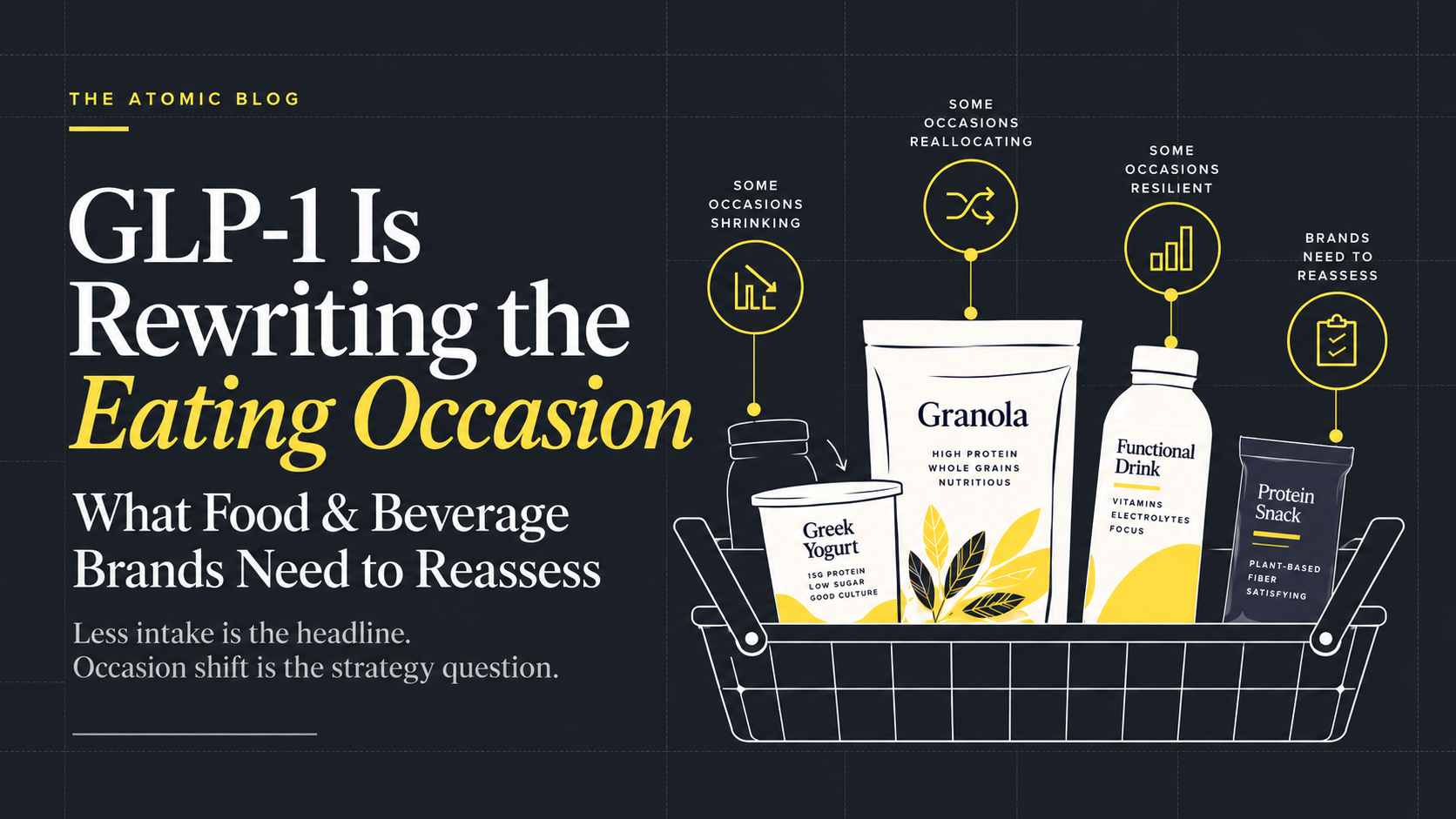
The GLP-1 conversation in Food & Beverage has a resolution problem: we have plenty of headlines about people eating less, but not nearly enough clarity on what a brand should actually change because of it.
“People will eat less” may be directionally true. But it does not tell a founder whether to change a pack size, rethink an innovation pipeline, adjust a retailer story or leave a strong part of the portfolio alone.
That distinction matters because GLP-1 adoption is already large enough to affect planning. Circana estimates that 23% of U.S. households include a GLP-1 user on an annual basis and projects those households could account for 35% of food and beverage units sold by 2030
The more useful question is not whether GLP-1 will affect Food & Beverage. It is where the effect actually shows up — by consumer, occasion, format and product — and what that changes in the business.
The occasion is the better unit of analysis
One of the easiest mistakes to make is treating “the GLP-1 consumer” as a single segment that simply buys less of everything.
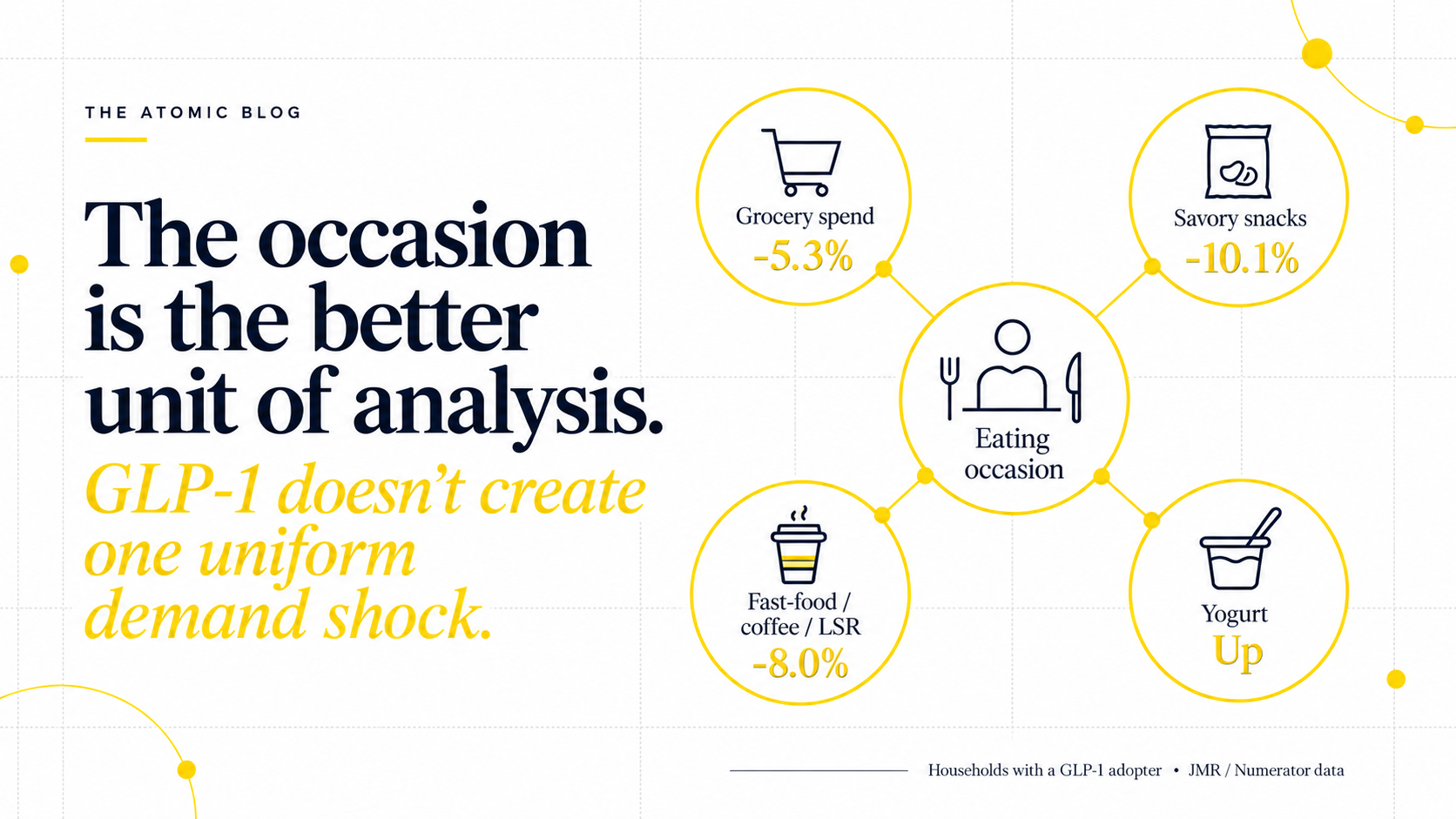
The evidence is more uneven than that. A peer-reviewed Journal of Marketing Research study using Numerator household transaction data found that households with a GLP-1 adopter reduced grocery spending by 5.3% within six months. Savory snacks declined 10.1%, while yogurt moved in the opposite direction. Spending at fast-food, coffee shop and limited-service restaurants fell 8.0%.
That is not one uniform demand shock. It is a reallocation of appetite, occasions and spending.
For a brand, category-level exposure is only the beginning. Two products sitting in the same aisle can play very different roles in the consumer’s day. One may depend on impulse and frequency. Another may solve a functional need or deliver enough sensory payoff that the consumer protects the occasion even as overall intake falls.
I would want to map the portfolio around those occasions before making a broad call on whether the brand is “exposed” to GLP-1.
There is another reason not to turn this into a permanent consumer archetype. The same Journal of Marketing Research study found that households discontinuing GLP-1 medication moved back toward their pre-adoption spending patterns. That suggests some of the behavior is linked to active use, not a fixed identity that should define a brand strategy forever.
A health halo is not a hedge
The other shortcut I would avoid is assuming the impact divides neatly into indulgent products that lose and “healthy” products that win.
Big Chalk Analytics’ 2025 industry work points in a more complicated direction. GLP-1 users reported trading down to smaller packs at higher rates than the broader U.S. population in categories including cold cereal and granola — not just chips and soda. In cold cereal, 28.2% of GLP-1 users reported buying smaller packs versus 18.7% of consumers overall; in loose granola, the gap was 27.1% versus 17.0%.
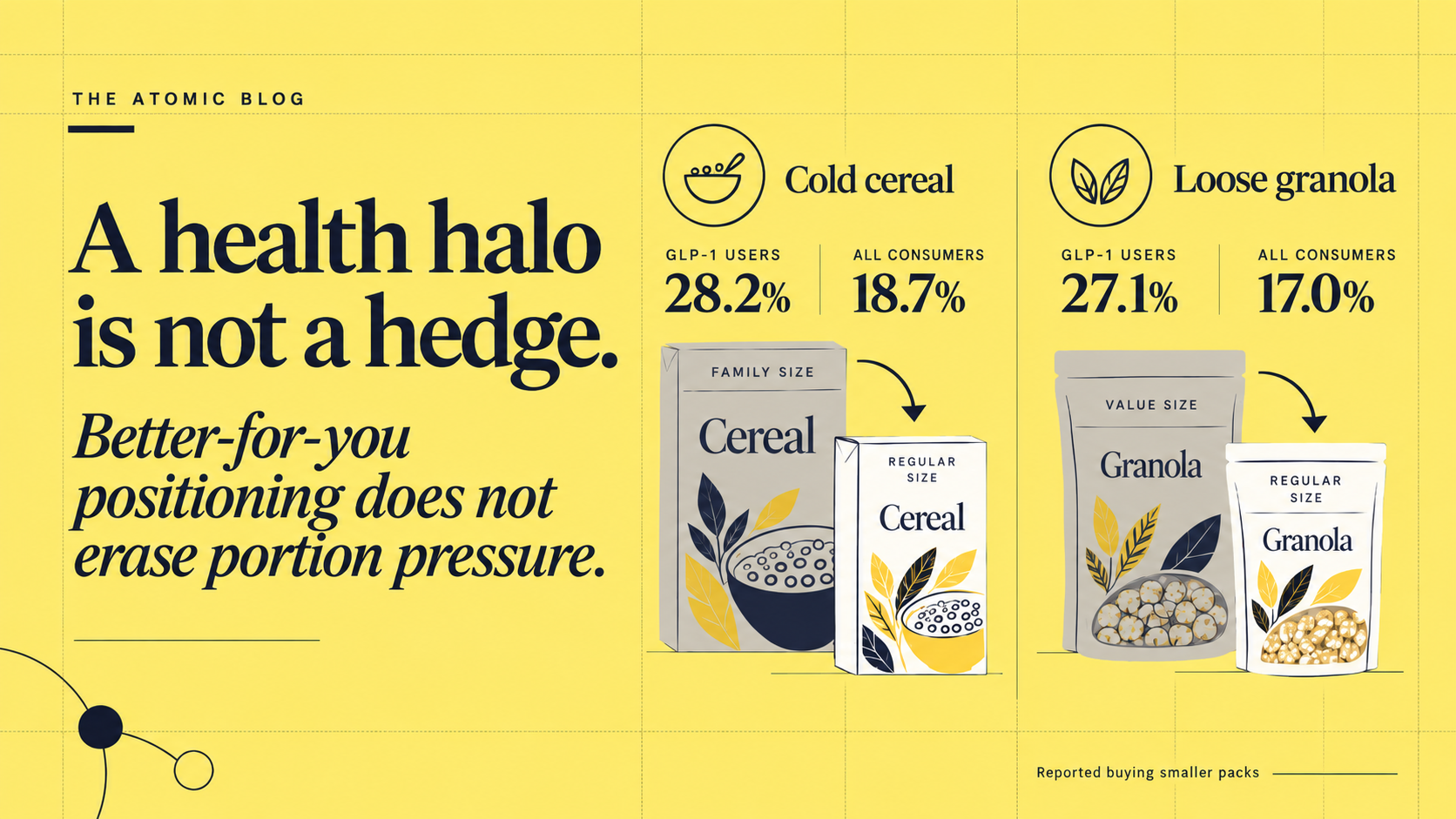
That matters because it suggests the pressure is not only about what is in the product. It is also about how much the consumer wants at one time and how often the occasion still happens.
A better-for-you positioning can be relevant. It is not immunity from a change in portion or frequency.
Pack architecture moves up the strategy stack
If consumption patterns change, pack architecture stops being a downstream packaging decision.
A brand built around a larger format may still have a strong product proposition and a real consumer need. But if the pack assumes a portion or frequency that no longer fits a meaningful part of the buyer base, the format itself becomes part of the growth problem.
That does not mean every brand needs a mini version of every SKU. It means teams should look at portion and pack with the same seriousness they bring to pricing or innovation.
Where are shoppers leaving product behind because the pack is too large for the occasion? Where would a smaller format unlock trial, portability or a more deliberate indulgence? And where would shrinking the pack simply weaken the value equation?
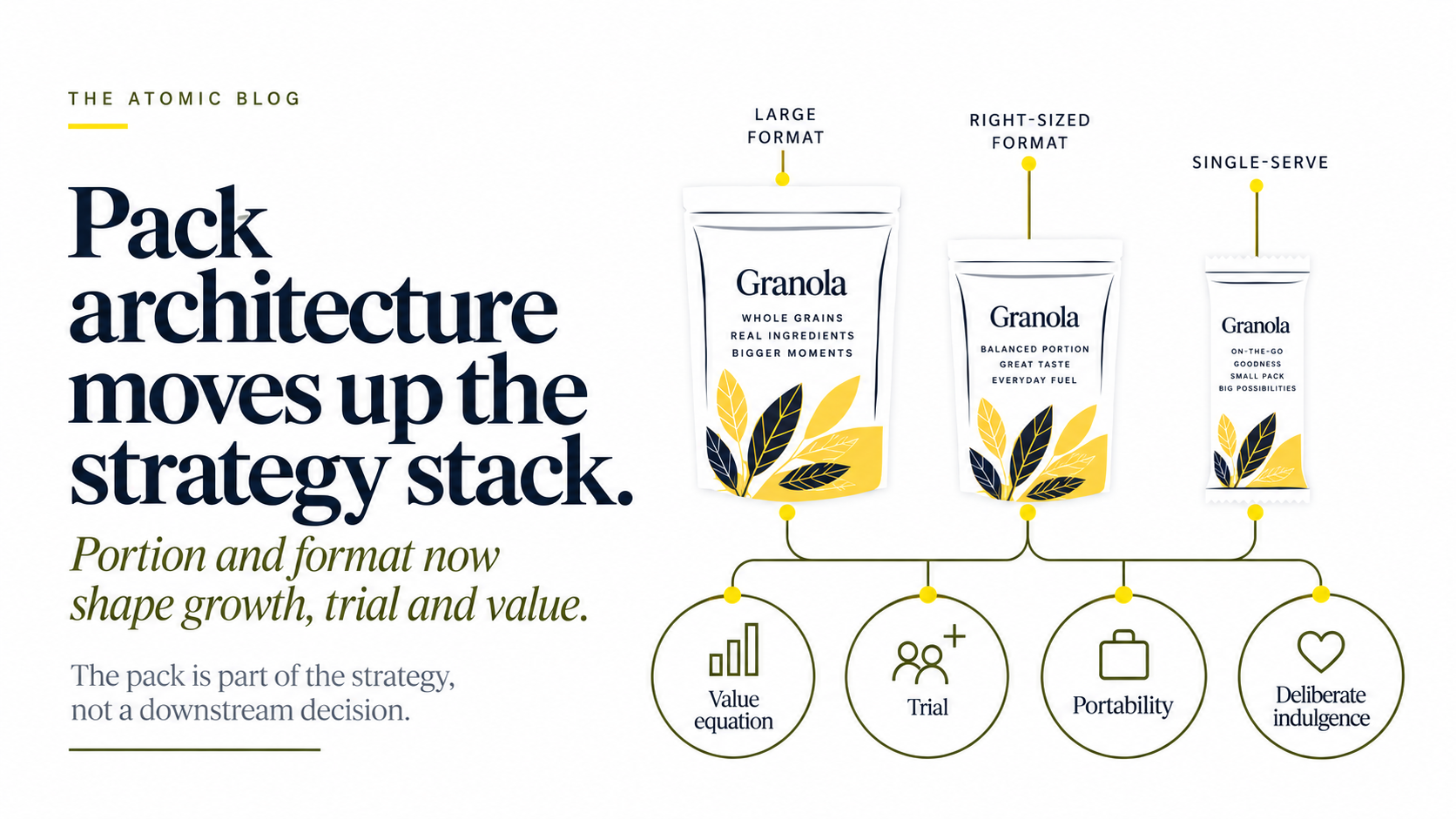
Those are different situations. They need different answers.
Less volume does not automatically create pricing power
There is another leap I would be careful with: if GLP-1 consumers buy less, they will simply pay more per unit.
Some current research points to a mix shift toward fewer, higher-quality or more expensive items. But that is not the same thing as blanket permission to charge more for less.
The product still has to earn its place in a smaller, more deliberate basket. That payoff might come from taste, protein, function, convenience, trust or an indulgent experience the consumer still values. But a smaller pack with a proportionally higher price and no stronger payoff is not a strategy. It is simply a different price-pack equation.
The question I would ask is: if the consumer gives this product fewer bites, fewer occasions or less space in the basket, what makes each of those moments worth protecting?
Do not react evenly to an uneven shift
This is where GLP-1 becomes a portfolio strategy question.
Some SKUs may need a pack change. Some may need a stronger product proposition. Some may be good candidates for innovation. Others may already serve resilient occasions and need no defensive reaction at all.
FTI Consulting’s 2026 analysis illustrates how uneven the shift can be. Frozen food showed a meaningful decline among active users, while functional beverages and water-related categories gained. In foodservice, FTI found quick-service wallet share falling in high-adoption areas while full-service and casual dining gained share, suggesting that at least some spending is moving between types of occasions rather than simply disappearing.
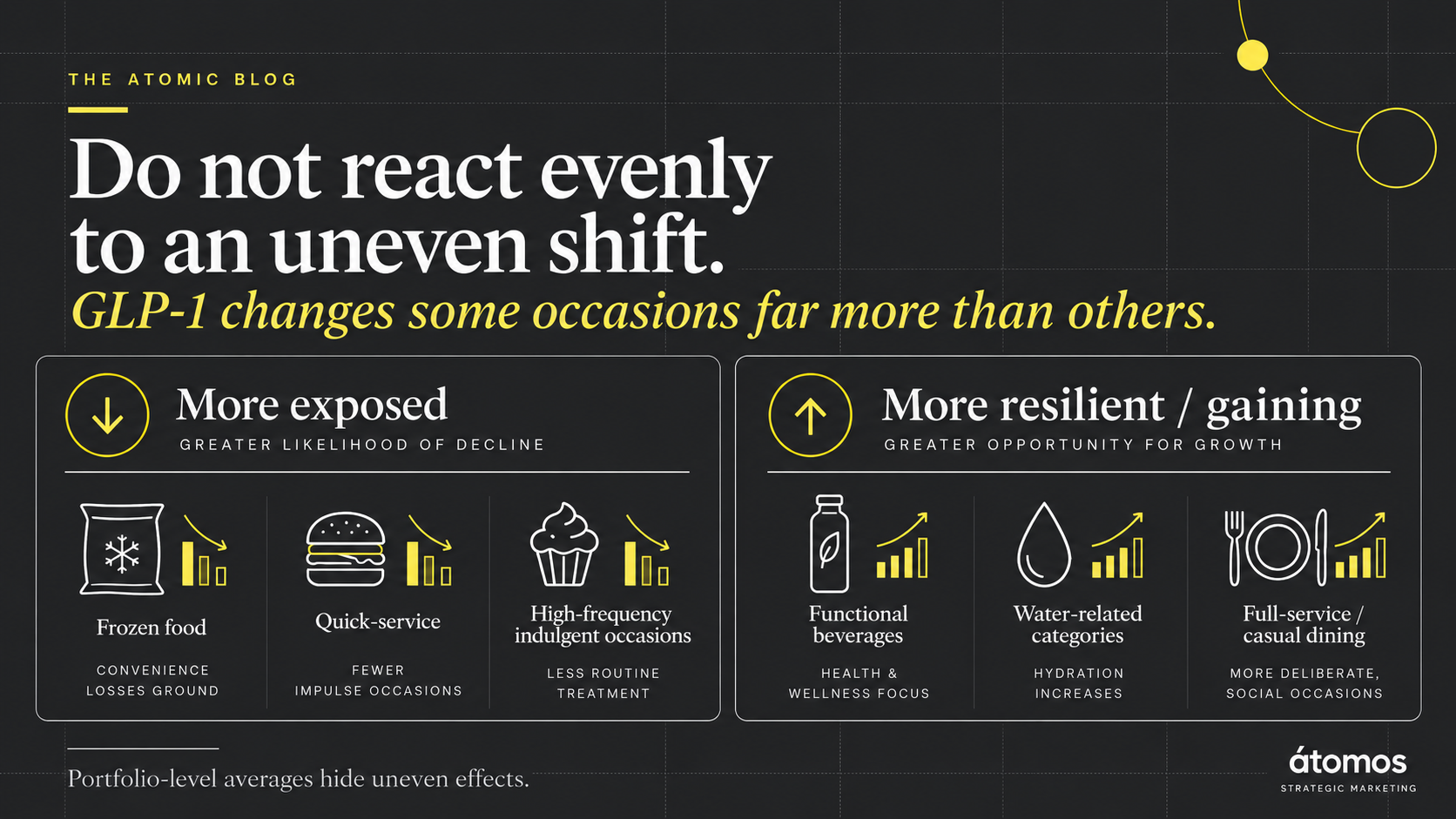
The wrong response to an uneven shift is to spread attention and investment evenly across the portfolio.
I would rather know which SKUs are most exposed, which are resilient and where a change would actually create a better consumer and economic outcome. That is a much more useful innovation brief than “we need a GLP-1 product.”
The retail conversation should get more specific
Whether a retailer asks about GLP-1 next quarter or two planning cycles from now, I would want the brand to have a better answer than “we are watching the trend.”
A useful retail point of view would show which occasions are changing in the category, where the brand sees exposure in its own portfolio, what pack or product changes it is testing and what evidence would trigger a bigger move.
That is a much stronger category conversation than showing up with a generic “GLP-1 friendly” concept. It tells the retailer that the brand understands the behavior underneath the headline and has a disciplined way to respond without chasing every signal.
What I would want answered before the next planning cycle
GLP-1 does not require a crisis response. It does require a more specific map of the business.
I would want a leadership team to answer six questions with evidence:
1. Consumer. How concentrated is GLP-1 use — or likely adoption — in the consumers and channels that actually matter to us?
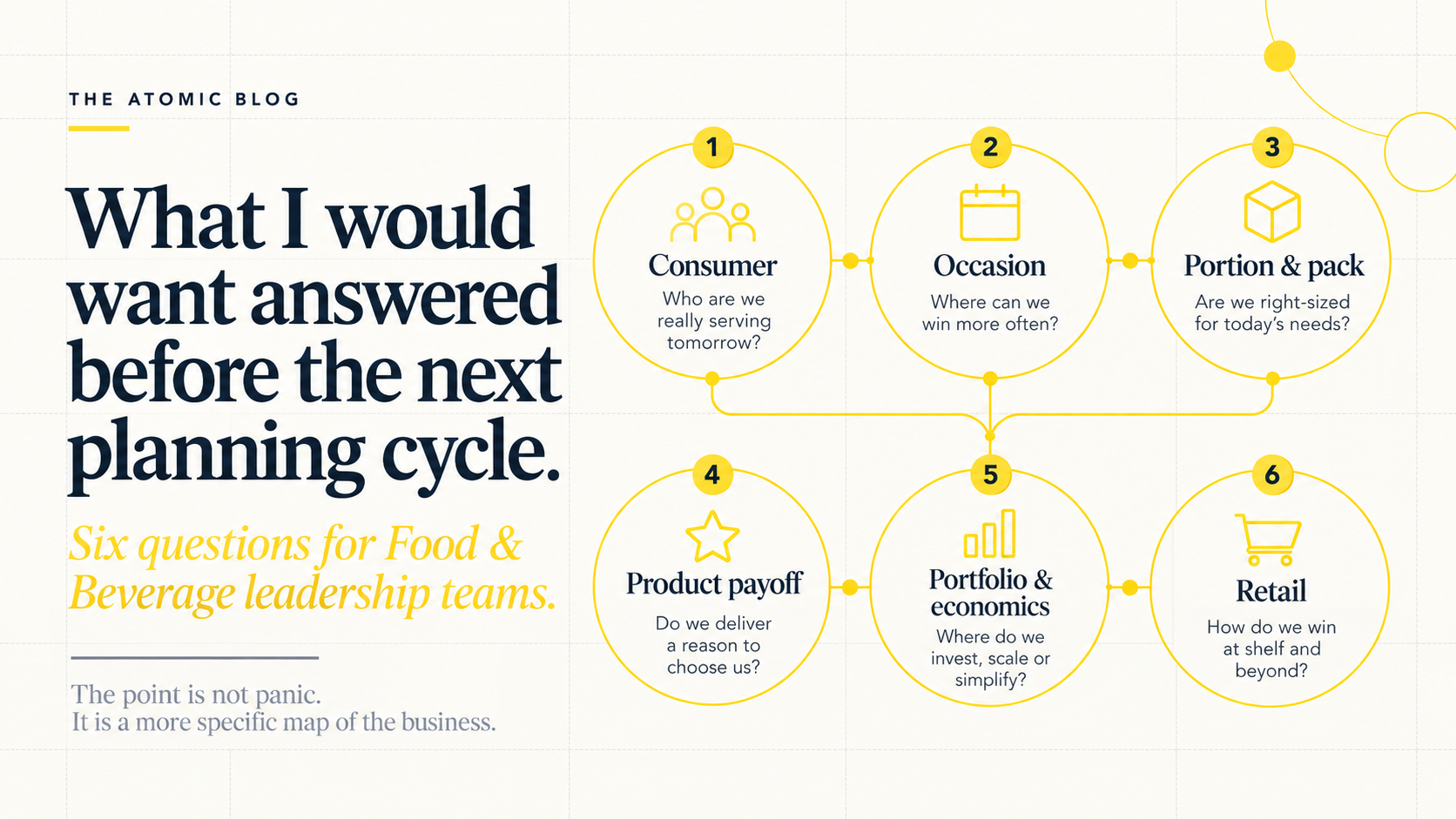
2. Occasion. Which occasions drive our business today, and which are most sensitive to lower frequency, smaller portions or more deliberate consumption?
3. Portion and pack. Where does our current format assume a consumption pattern that may be changing?
4. Product payoff. If the consumer is making fewer eating decisions, what makes ours worth keeping?
5. Portfolio and economics. Which SKUs are exposed, which are resilient, and what happens to margin and velocity if volume changes?
6. Retail. What can we show a buyer about our category and portfolio beyond saying that we are “watching the trend”?
The point is not to predict exactly how GLP-1 adoption evolves. The data will keep moving. The point is to know where your business is sensitive enough that the answer matters.
The better question
GLP-1 is not one consumer segment, one category story or one innovation brief. It is a change in how some consumers allocate appetite across occasions.
For Food & Beverage leaders, that makes the operating question much more specific: which occasions in our portfolio are losing relevance, which are becoming more valuable, and what should we change because of it?
That is the work I would want done before changing the portfolio, the pack or the plan.
ÁTOMOS — FRACTIONAL CMO FOR FOOD & BEVERAGE
We bring big-CPG playbooks to growing food and beverage brands.
We embed inside your business, read your category the way large CPG does, and help you move with clarity and speed — without the full-time cost.
→ Let's talk: atomos.us/contact
-
Start with the occasions and consumers that actually drive the business. Then look at portion, pack, product payoff, portfolio economics and retail implications. The goal is not to label the company “high” or “low” exposure; it is to identify where the behavior could materially change a decision.
-
No. Current evidence shows uneven effects across categories and occasions. Some calorie-dense and high-frequency purchases have declined, while other categories and formats have been more resilient or gained share. Portfolio-level averages can hide those differences.
-
Not automatically. Smaller formats can make sense when the current pack no longer fits the occasion or portion. But changing pack size without understanding the consumer job, economics and value equation can create a new problem instead of solving one.
-
No. Buying less does not automatically mean a consumer will pay more per unit. A higher price still has to be supported by a stronger payoff — whether that is taste, function, convenience, trust or an experience the consumer wants to protect.
-
No. The better first step is to understand where the existing portfolio is actually exposed. For some brands the opportunity may be product innovation; for others it may be pack architecture, positioning, assortment or no immediate change at all.
