
What Two Years of Building átomos Taught Us About CPG Growth
Two years. Eleven lessons. One conviction: growth requires architecture, not just activity.
The Lessons Didn't Come From a Strategy Deck. They Came From the Work.
Two years ago, I left the comfort of a long run inside large CPG — the structure, the resources, the clarity of an established playbook — and started átomos with a single belief: that growth-stage food and beverage brands needed the same quality of strategic marketing thinking that the big players had, without the full-time cost that came with it.
What I did not fully anticipate was how much the first two years would teach me. Not about frameworks or theory — I had plenty of that. About founders. About the real constraints inside growing brands. About what actually breaks when a company tries to scale. About the distance between marketing activity and marketing progress.
These eleven lessons did not come from a strategy deck. They came from conversations at 7 a.m. before a broker meeting, from packaging reviews where the design was beautiful and the positioning was invisible, from honest moments with founders who had spent real money on marketing and were not sure why it hadn't moved the needle. They came from the work.
I am sharing them here not because they are definitive or complete, but because I think they are honest. And in this category, honesty is more useful than inspiration.
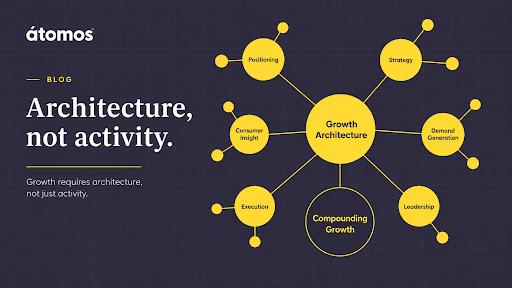
"Growth does not come from isolated marketing activities. It comes from connecting the right elements: positioning, consumer insight, strategy, demand generation, execution, and leadership."
One Conviction Runs Through All of It
Before the eleven lessons, one belief holds all of them together.
Most CPG and food and beverage brands do not fail because they lack activity. They fail because they lack architecture. They have agencies. They have content. They have a brand deck and a media plan and a social calendar. What they often do not have is the system that connects all of it to a clear consumer, a clear position, a clear growth goal, and a clear way to measure whether it is working.
That is what átomos exists to build. Not campaigns. Architecture.
Everything below is a lesson that points back to that same place.
The 11 Lessons
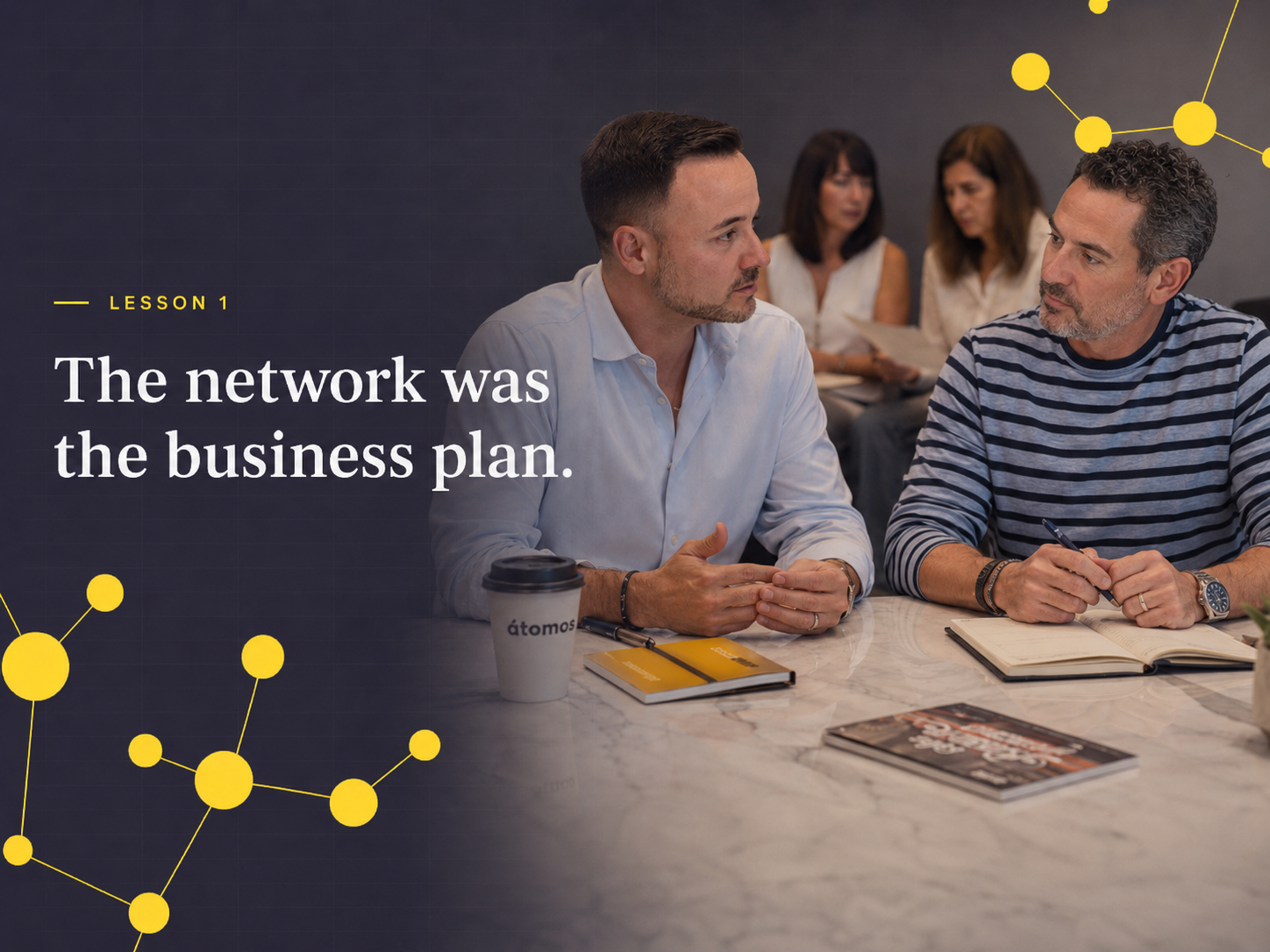
1. The network was the business plan.
The lesson:
When átomos launched, I did not have a sales deck, a lead generation funnel, or an outbound motion. What I had was twenty years of relationships built inside CPG, agencies, retail, and the broader food and beverage ecosystem. Almost every early conversation came through someone who already knew the work. Not the pitch — the work. Trust built over time became the most reliable business development asset átomos had.
Practical implication for founders:
For founders, the implication is identical. In CPG, distribution, retailer relationships, and broker trust are almost always relationship-first. The brand that spends three years building the right connections — with buyers, with brokers, with distributors, with the right co-manufacturers — is building a growth asset that does not show up on a balance sheet but determines outcomes as much as any product innovation.
Takeaway:
Business development is not outreach. It is accumulated trust. Invest in it before you need it.
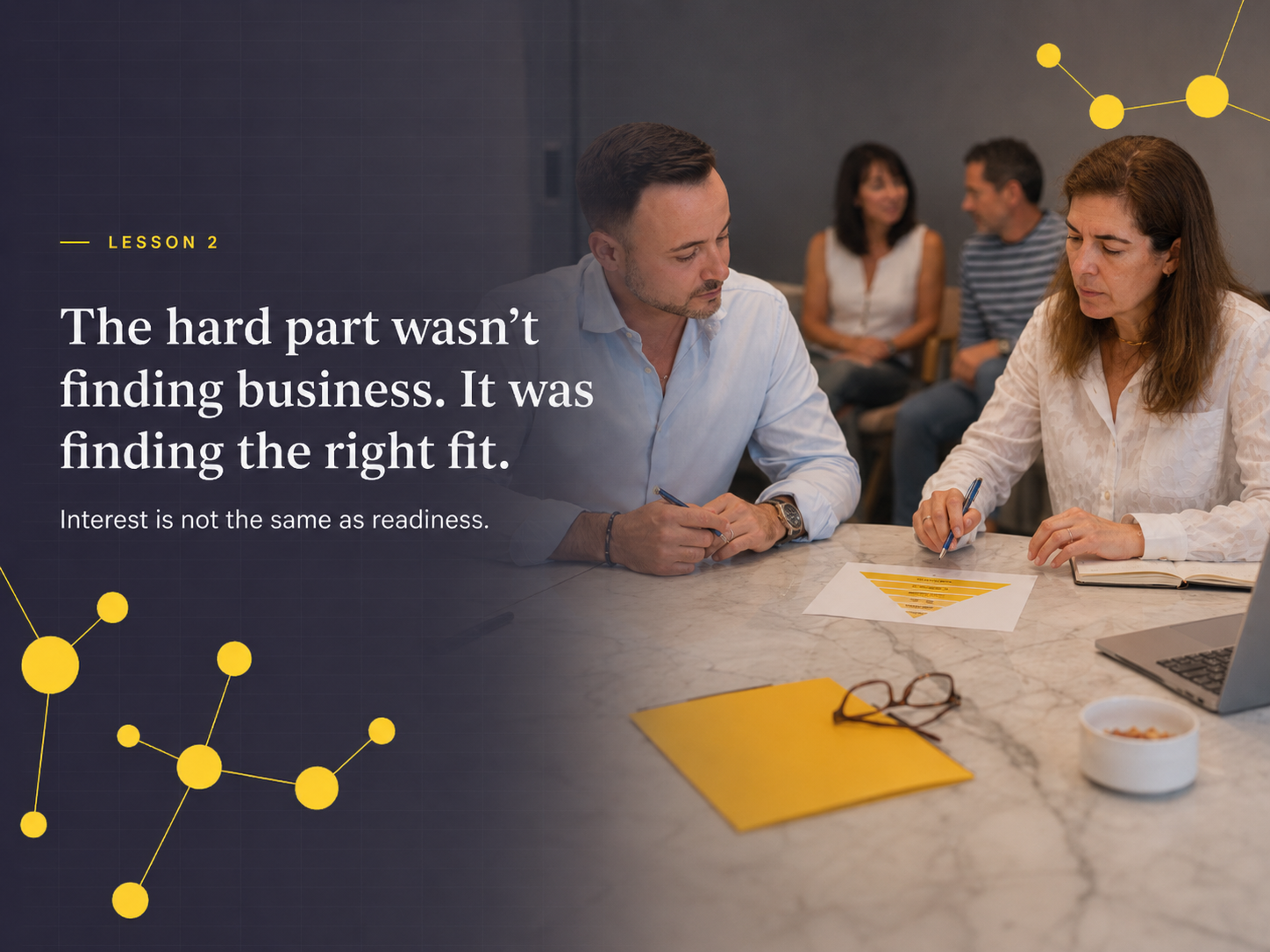
2. The hard part wasn't finding business. It was finding the right fit.
The lesson:
Demand came earlier than expected. But demand and fit are different things. Some of the most engaged early conversations were with founders who were genuinely excited about growth but not yet ready to invest in strategy — either because the budget was not there, the timing was off, or the belief that more execution was the answer had not yet been tested and disproven. Learning to identify the difference between interest and readiness was one of the most important and most uncomfortable lessons of year one.
Practical implication for founders:
For founders, the same dynamic plays out in hiring, partnerships, and retail expansion. A buyer who is interested is not a buyer who is ready to commit. A distributor who is enthusiastic is not a distributor with the right network for your category. Chasing every signal of interest without qualifying fit is one of the most common and most expensive mistakes in early-stage CPG growth.
Takeaway:
Fit, timing, and genuine readiness matter more than enthusiasm. Not every opportunity is the right opportunity.
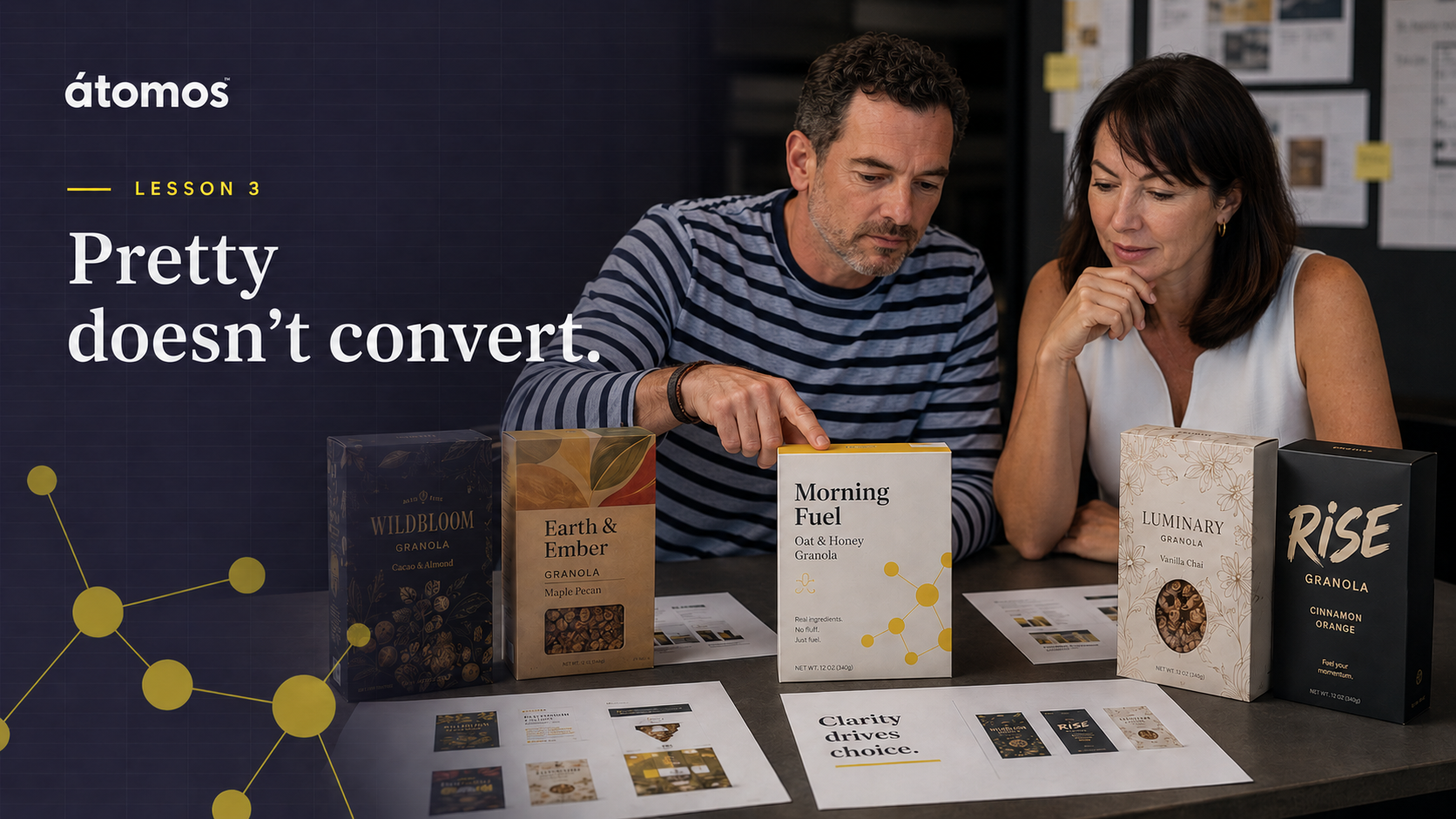
3. Pretty doesn't convert.
The lesson:
I have sat in more packaging reviews than I can count where the design was genuinely beautiful — sophisticated color palette, thoughtful typography, premium material finishes — and the brand was invisible. Beautiful packaging and clear packaging are not the same thing. A consumer standing in an aisle with eight seconds and forty competing options does not stop to appreciate craft. They stop when something communicates a clear reason to reach for it. Clarity is the work. Beauty is a component of clarity, not a substitute for it.
Practical implication for founders:
Before the next packaging iteration, answer one question: can a person who has never heard of this brand understand who it is for and why they should care within eight seconds on shelf? If the answer requires explanation, the packaging is not done — regardless of how good it looks in the presentation.
Takeaway:
Great packaging makes the positioning visible at the point of purchase. Pretty packaging makes the designer proud. Only one of those sells product.
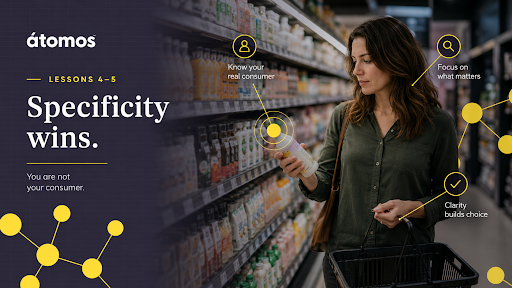
4. If you build for everyone, you capture no one.
The lesson:
One of the most consistent patterns across growth-stage CPG brands is the reluctance to be specific. Specific about who the consumer is. Specific about the occasion. Specific about the problem the product solves. The fear is that specificity means exclusion — that choosing a consumer means walking away from everyone else. The reality is the opposite. Specificity is what makes a message land. Vague positioning produces vague brands. And vague brands lose shelf space to private label, because a consumer who cannot articulate why they chose your product over the store brand does not come back.
Practical implication for founders:
The most useful exercise a founder can do is try to finish this sentence without equivocating: 'We are the only brand for [specific person] who [specific situation] because [specific reason].' If the sentence requires more than ten words in each bracket, the positioning is not finished.
Takeaway:
Winning brands choose their consumer deliberately and go deep. 'For everybody' is not a strategy. It is the absence of one.
5. You are not your consumer.
The lesson:
This one is uncomfortable to say and important to say clearly. Founders build brands from a place of genuine passion and personal conviction. That is usually a strength. But it becomes a liability when the founder's own taste, preferences, and experience become the primary filter for consumer decisions. I have watched founders reject packaging that tested well with real buyers because it did not feel premium enough to them personally. I have watched brands choose flavor profiles, price points, and retail channels based on founder instinct that turned out to be disconnected from how the actual consumer thought and behaved. Consumer insight is not opinion. It is evidence collected from real people who are not you.
Practical implication for founders:
Build systems to hear from your actual buyer — not through focus groups necessarily, but through real purchase behavior, sampling feedback, velocity data, and conversations with people who represent the consumer, not the founding team. The most useful question is not 'do we like this?' It is 'does the person we are trying to serve reach for this, understand it, and come back for it?'
Takeaway:
Conviction builds brands. But consumer truth determines whether they grow.
6. Sometimes the pivot is backing all the way out.
The lesson:
The word 'pivot' in startup culture usually implies a directional adjustment — moving from one market to another, reframing the positioning, shifting the channel mix. But some of the most strategically important decisions I have seen in CPG are not adjustments. They are stops. A brand that went to market with the wrong positioning, the wrong format, or the wrong consumer hypothesis sometimes needs to do more than pivot. It needs to withdraw, rebuild the foundation honestly, and re-enter from a place of genuine clarity. The sunk cost of the first attempt is real. It is also not a reason to continue.
Practical implication for founders:
If your marketing is not working and the answer is unclear, the instinct will be to run more campaigns, change agencies, or test a new channel. Before doing any of that, ask a harder question: is the foundation solid? Is the positioning real? Is the consumer clearly defined and validated? If the answer to any of those is uncertain, more activity will not fix it.
Takeaway:
The most expensive thing a brand can do is scale the wrong strategy. The most courageous thing is to stop and build the right one.
7. You can't market on hope.
The lesson:
Organic growth is not a plan. It is an outcome, and an unpredictable one. I have talked to too many founders who expected that a great product, a well-designed package, and a social media presence would compound into meaningful retail velocity — without a real budget, a real demand generation plan, or a real understanding of how the consumer journey from awareness to trial to repeat actually works. Hope is not a media strategy. Authenticity is not a distribution strategy. Word of mouth is not a demand generation engine you can rely on at scale.
Practical implication for founders:
If your marketing plan is essentially 'build something great and tell people about it organically,' you need a more honest plan. Not necessarily a bigger budget, but a clearer investment thesis: what are you spending, on what, to move which consumer from where to where, and how will you know if it is working? Those questions require answers before spend, not after.
Takeaway:
Marketing requires budget, discipline, and realistic expectations about the timeline between investment and return. Hope is not a substitute for any of those.
8. Money buys a builder. It doesn't buy a blueprint.
The lesson:
One of the most common mistakes I see in growth-stage CPG is the belief that the right agency or the right hire will solve the strategy problem. It will not. Agencies are builders. They can execute creative, run media, manage social, handle PR, and produce content — and they can do it well. But an agency cannot tell you who your consumer is, why your positioning wins, which channels deserve investment and why, or what the one thing is that your brand needs to own in order to compete. That is the blueprint. And without the blueprint, builders build the wrong thing, on time and on budget.
Practical implication for founders:
Before hiring the next agency or making the next marketing hire, make sure the strategic direction is clear enough that you can brief them honestly. If the briefing conversation requires the agency to tell you what you stand for, you have the wrong order of operations. Strategy first. Execution second.
Takeaway:
Agencies execute strategies. They do not create them. If you do not have a clear strategy, the agency cannot compensate for its absence.
9. Big ideas aren't the only ones that win.
The lesson:
One of the most consistent surprises of the past two years has been how often the brands with the strongest growth are not the ones with the most ambitious concepts. They are the ones with the most focused execution. A founder with a specific, unglamorous product solving a specific, real problem for a specific, well-understood consumer — who executes consistently, builds retail relationships carefully, and resists the temptation to over-extend — can build a durable business in a way that a founder with a big idea and scattered execution cannot. The CPG category is full of brilliant concepts that never found velocity. It is also full of simple products that earned loyal repeat purchase because somebody stayed focused long enough to deserve it.
Practical implication for founders:
Ask whether your growth challenge is a concept problem or an execution problem. Most of the time, it is not that the idea is wrong. It is that the execution — the positioning, the channel strategy, the retail program, the team alignment — is not tight enough to make the idea work in the real world. Focus and patience are competitive advantages. Use them.
Takeaway:
Conviction and patience, applied to a clear and focused strategy, outperform ambition and complexity almost every time.
10. Half the job is teaching.
The lesson:
When átomos started, I thought the primary value of what we do was strategic insight — the ability to see a category clearly, identify the right positioning, and recommend the right path. That is part of it. But the bigger part, I have come to understand, is teaching. Helping a founder understand why the positioning needs to be sharper, not just that it does. Helping a marketing team understand why velocity is the metric that matters, not just that it is. Helping a leadership team understand the difference between a marketing execution problem and a marketing leadership problem — not just diagnosing it, but building their internal fluency so they can see it themselves next time. The best strategic partnerships transfer capability, not just recommendations.
Practical implication for founders:
When working with a strategic partner, agency, or advisor, the question to ask is not just 'what will you do for us?' It is 'what will we understand better at the end of this that we did not understand at the beginning?' Strategic work that leaves the team more capable is worth significantly more than strategic work that leaves the team dependent.
Takeaway:
Great strategic partners do not just do the work. They help the people they work with understand why the work matters — and do it better on their own.
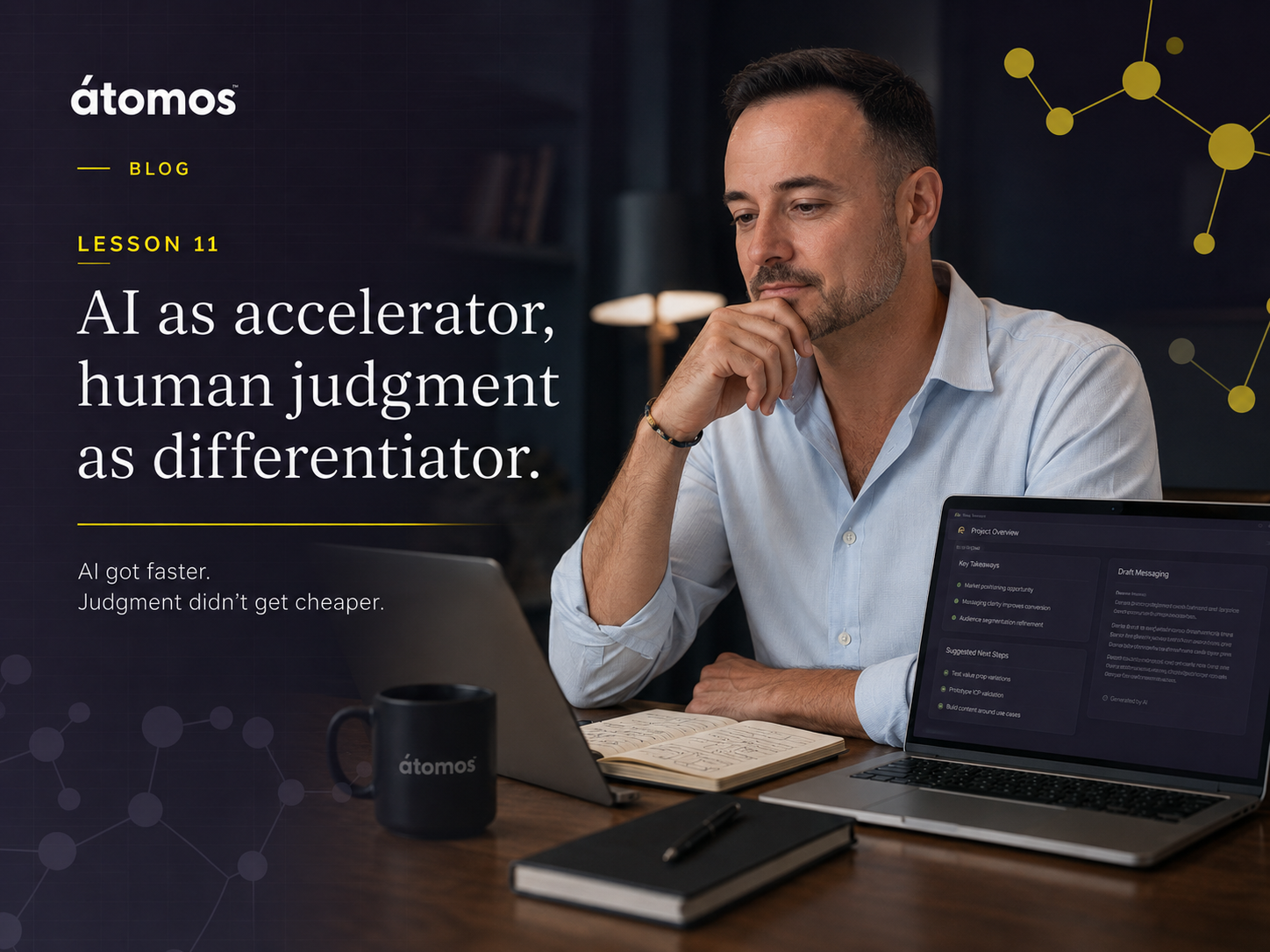
11. AI got faster. Judgment didn't get cheaper.
The lesson:
In the past two years, AI tools have changed the pace of research, briefing, content drafting, competitive analysis, and presentation building in ways that are genuinely useful. Tasks that used to take days take hours. Frameworks that used to require several iterations get to a useful draft faster. That compression of time is real and valuable. What AI has not changed — and will not change — is the quality of the judgment that decides what to do with the output. Knowing which consumer insight is the strategically relevant one. Knowing whether a positioning statement is truly differentiated or just differently worded. Knowing when a founder is ready to scale and when they are about to scale the wrong thing. That judgment comes from experience, from category depth, from pattern recognition built over years of actual operating work. AI can accelerate the process. It cannot replace the part that actually determines the outcome.
Practical implication for founders:
Use AI to compress timelines, sharpen first drafts, and accelerate the analytical work. But be clear about what it cannot do: it cannot replace the senior judgment that determines whether you are asking the right questions, solving the right problem, or building toward the right outcome. In CPG, where the cost of a wrong strategic decision compounds across distribution cycles, retailer relationships, and shelf resets, judgment is not a commodity.
Takeaway:
AI is a tool that makes good judgment more productive. It is not a substitute for the judgment itself.
"AI can accelerate the process. It cannot replace the part that actually determines the outcome."
Two Years In. Here Is Where We Are Going.
Two years is not a long time. But it is long enough to know that the conviction behind átomos — that growth-stage CPG and food and beverage brands need architecture, not just activity — is the right one.
Every lesson above came from a real conversation, a real brand, a real problem. The founders we have worked with are not looking for inspiration. They are looking for clarity. They want to understand why their velocity is stalling, why their positioning is not converting, why their agency is producing work that does not feel like it is moving the business. They want someone in the room who has seen these problems before and knows how to help them build through it.
That is the work. And it is the work we intend to keep doing.
To every founder, operator, partner, collaborator, and member of the átomos network who has been part of the first two years: thank you. The brands, the conversations, the hard questions, and the honest feedback — that is what made these lessons possible. That is what made átomos real.
The next chapter is the same as the first, with more depth: helping CPG and food and beverage brands build the clarity, structure, and judgment required to scale. Not faster. Better.
"Not faster. Better. That is the only kind of growth that compounds."
-
átomos is a boutique fractional CMO and strategic marketing leadership firm for growth-stage CPG and food and beverage brands. átomos helps brands install the marketing architecture required to scale: consumer clarity, brand positioning, channel strategy, demand generation systems, team alignment, and senior marketing leadership — without the full-time cost of a permanent CMO hire.
-
The most consistent mistake is investing in marketing execution before the strategic foundation is solid. Brands hire agencies, run campaigns, and scale distribution before they have a clear answer to who their consumer is, why their positioning wins, and how each marketing investment connects to a measurable business outcome. The result is activity without compounding — spend that does not stack into sustainable growth.
-
An agency executes within a defined scope — creative, media, social, PR. A fractional CMO provides embedded strategic leadership: setting priorities, clarifying positioning, aligning agencies, building the marketing operating system, and connecting every marketing decision to business outcomes. Agencies need a leader to brief them well. A fractional CMO is that leader.
-
Because the consumer decision in food and beverage happens in seconds, often on a shelf with forty competing options. Clear positioning determines whether a consumer reaches for your product or the one next to it. It is also what drives repeat purchase — a consumer who cannot articulate why they chose your product over the store brand does not come back. Positioning is not a tagline. It is the logic that makes everything else in the marketing system work.
-
Marketing architecture is the decision system that connects strategy to execution. It includes a validated consumer profile, a clear and differentiated positioning, defined channel roles, a conversion model for each stage of the consumer journey, and a measurement framework that connects marketing investment to business outcomes like velocity, repeat purchase, and household penetration. Without this architecture, marketing produces activity. With it, marketing produces compounding growth.
ÁTOMOS — FRACTIONAL CMO FOR FOOD & BEVERAGE
We bring big-CPG playbooks to growing food and beverage brands.
We embed inside your business, read your category the way large CPG does, and help you move with clarity and speed — without the full-time cost.
→ Let's talk: atomos.us/contact
