Foundation Before Growth: The Sequencing Mistake That Breaks CPG Growth
A retailer says yes. A round closes. The team grows from four to eleven. One person hires an agency. Someone else brings in two freelancers. Six months ago, the founder made every call. Now they are approving budgets they cannot fully see end to end.
The instinct is immediate: now we scale. More doors. More spend. More creators. More campaigns. More people.
The problem is not ambition. It is sequence.
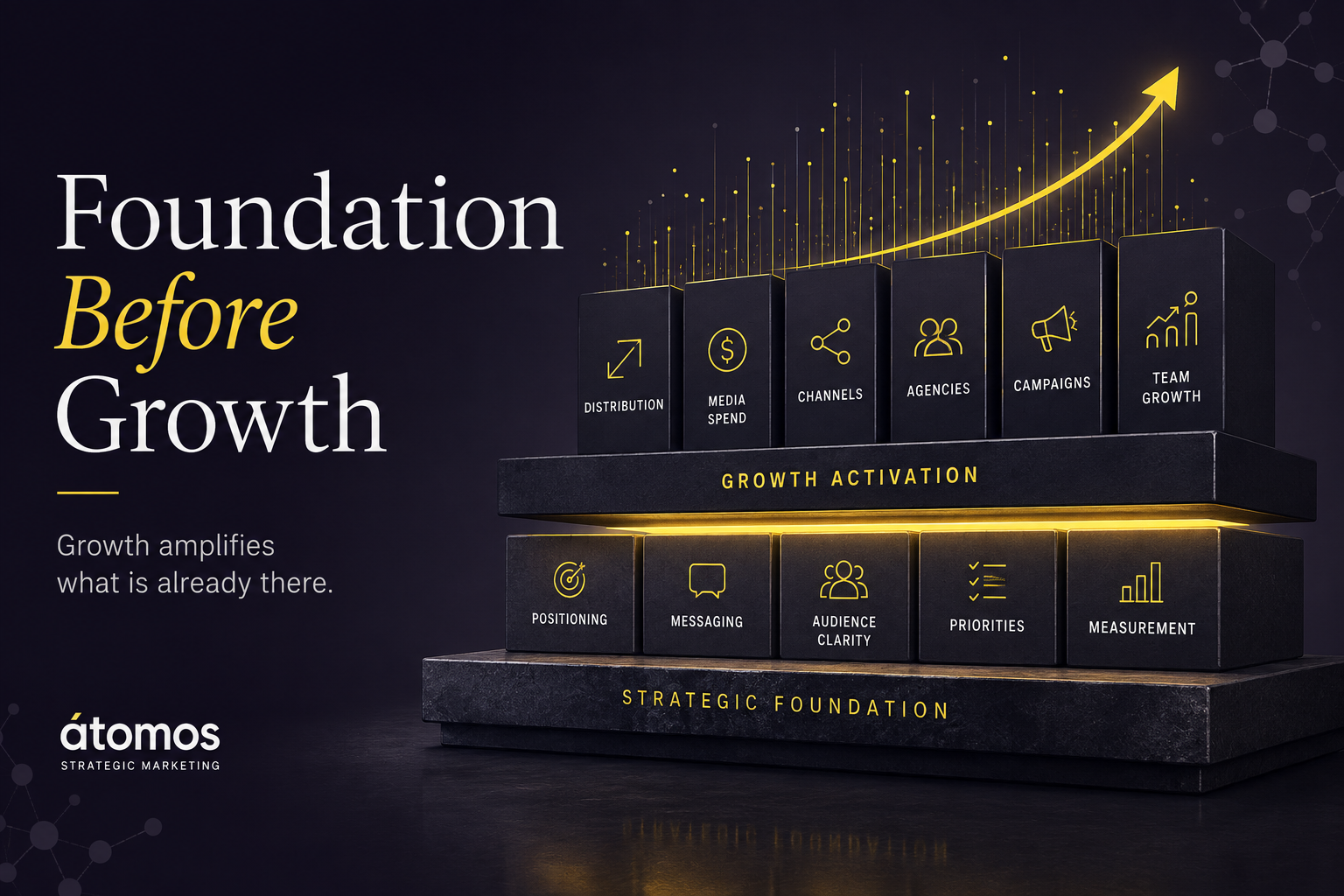
Scaling does not repair ambiguity. It multiplies it. If a brand cannot clearly answer who it is for, what it wants to own, why a shopper should choose it, and what business problem marketing is supposed to solve, more distribution and more spend simply make the confusion more expensive.
This is not an argument for moving slowly. Growth-stage brands cannot afford slow. It is an argument for getting the sequence right: move fast once the business knows what deserves to be scaled.
Speed without direction creates noise. Foundation creates productive speed.
The Sequence Matters More Than the Tactic
Every growth move puts more pressure on the strategy underneath it. The issue is rarely that a brand chose the wrong tactic. More often, the tactic arrived before the decision it was supposed to support.
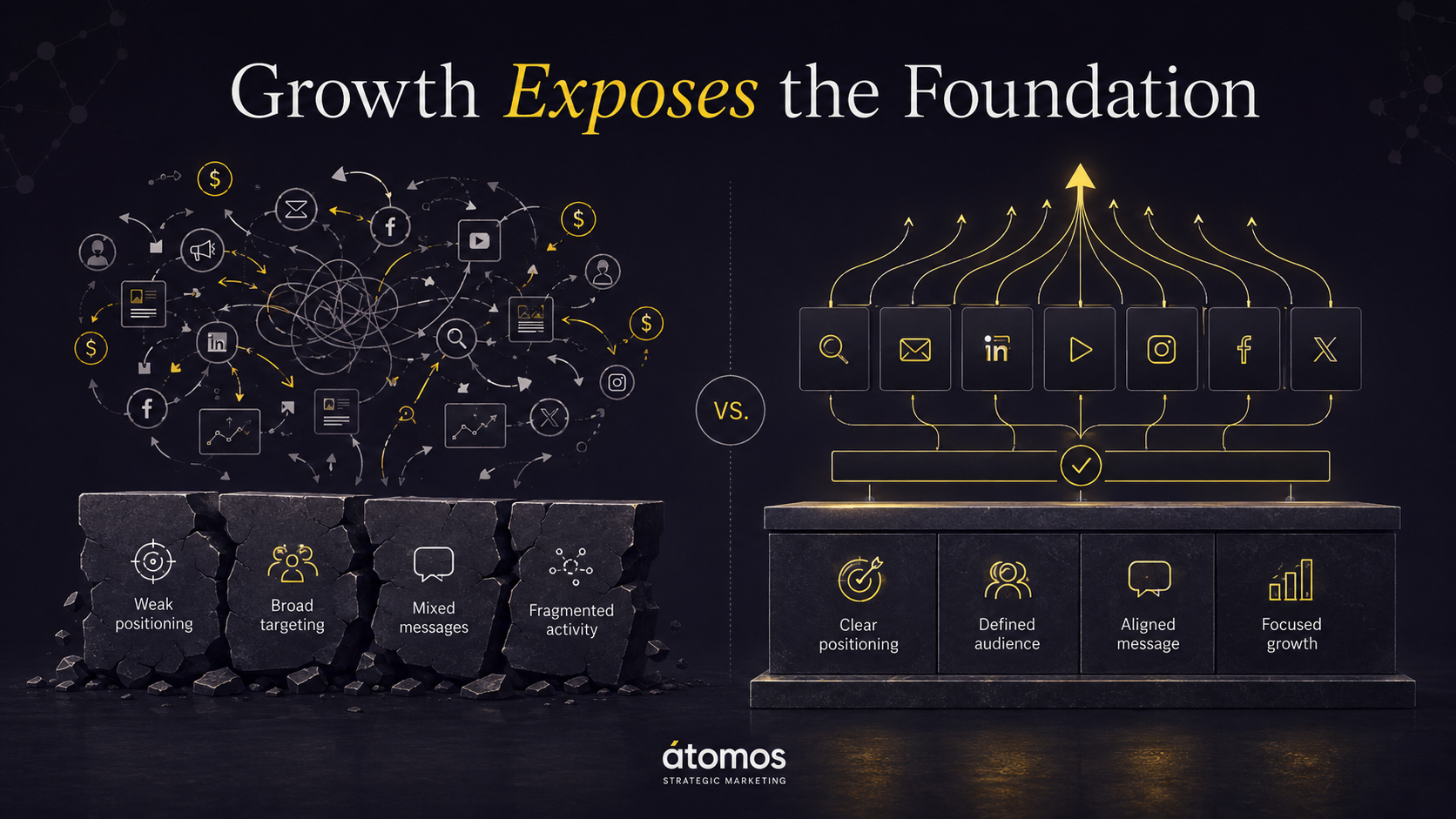
Agency before strategy means the agency fills the positioning gaps. Spend before message clarity means the brand pays to test five different versions of itself. Distribution before demand means availability expands faster than consumer pull. Headcount before priorities means more people are moving without a shared definition of what matters most.
These are different symptoms of the same mistake: scaling the next layer before the one underneath it is clear enough to carry the weight.
When positioning, priorities, tradeoffs, and measurement are owned at the leadership level, partners can execute against a shared bet. When they are not, every new agency, hire, retailer, or channel starts making strategy decisions by default.
Distribution Before Demand Is One Sequencing Mistake
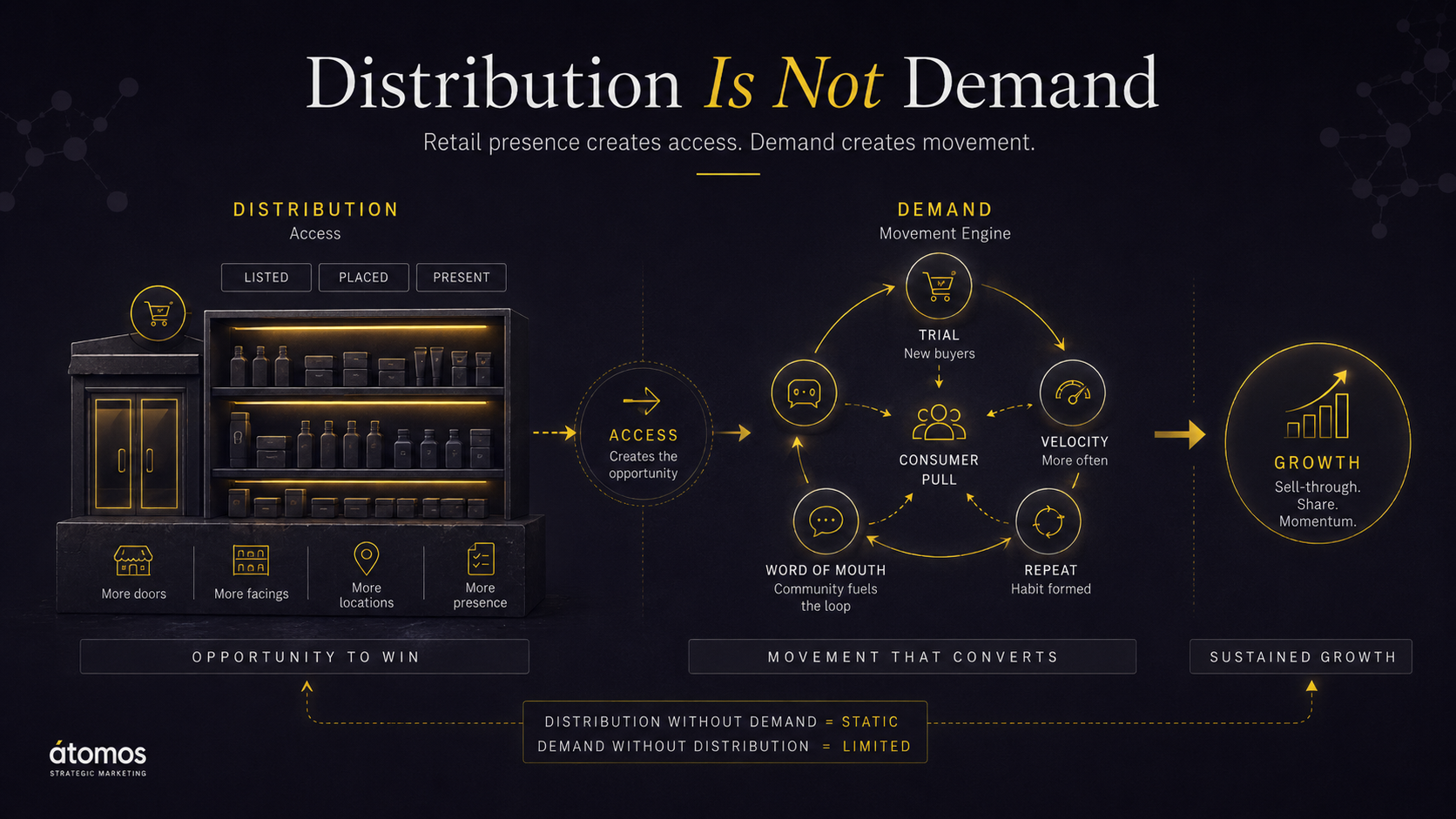
CPG and Food & Beverage brands see this mistake clearly in retail. A new retailer, region, or set of doors is real validation — but it is still only access.
Distribution gives the product a place to win. Demand is what makes it win: trial, velocity, repeat, and enough consumer pull to keep the product productive on shelf.
Bain & Company reported that 113 high-growth U.S. consumer brands captured roughly 36% of FMCG growth in NielsenIQ-tracked channels in 2025 while representing less than 2% of total market share. The useful lesson is not simply to get more doors. Bain’s work on insurgent brands points to the harder discipline: build consumer pull and velocity as distribution expands.
A brand can add distribution faster than it builds demand. That is why more doors should be treated as an activation decision, not proof that the underlying growth system is working.
The same logic applies beyond retail: more media before a clear message, more creators before a defined consumer, or more agencies before a shared growth priority can all create activity without compounding advantage.
The question is not “Can we scale this?” It is “What evidence have we earned that says this is the next thing to scale?”
A Better Growth Sequence
A practical growth sequence is simple: CLARITY → ACTIVATE → EVIDENCE → SCALE. First decide who matters, what you want to own, what problem you are solving, and what should move. Then activate the highest-leverage work against that bet. Use the market response as evidence. Only then decide what deserves more dollars, doors, people, or channels.
This is not a rigid linear process. It is a decision discipline. Brands may move quickly across the sequence, but skipping a step usually pushes an unresolved strategic question downstream — where it becomes more expensive to fix.
The Five Questions That Should Be Clear Before You Scale
Before increasing spend, headcount, doors, or agency partners, the leadership team should be able to answer five questions without a meeting to debate the answer. These are not branding questions. They are operating decisions.
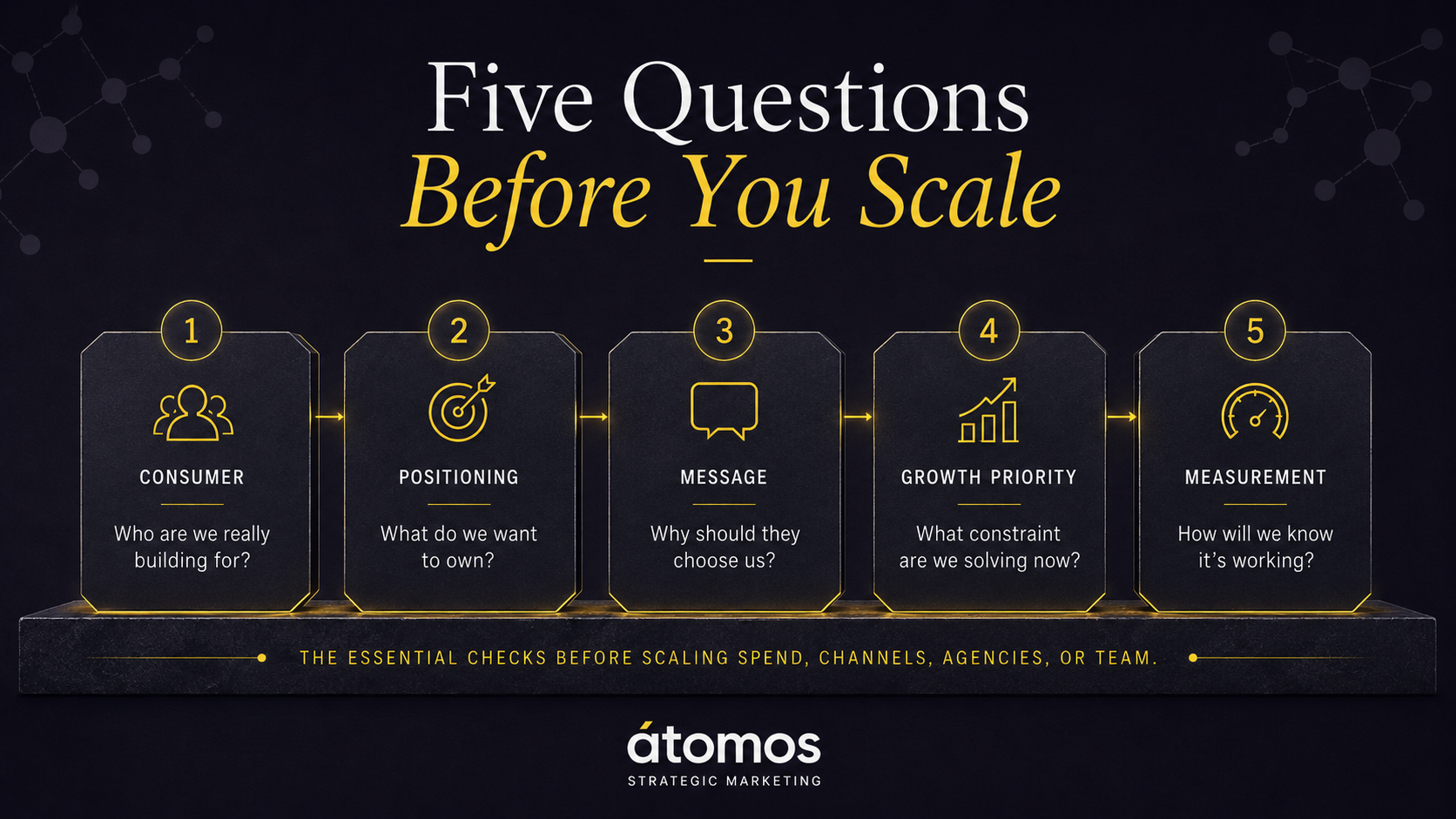
1. Consumer. Who, specifically, are we building this for — and what tension, job, or unmet need are we solving? Not a demographic. A person with a reason to care.
2. Positioning. What do we want to own in that consumer’s mind that competitors cannot credibly own? Good positioning makes choices easier. If it only makes the deck sound better, it is not doing its job.
3. Message. What is the simplest, strongest reason a shopper should choose us over what is already in the cart? If the team cannot say it clearly, an agency will not fix it downstream.
4. Growth priority. What specific business constraint are we solving this quarter — trial, velocity, repeat, distribution productivity, margin, or something else? “Growth” is not a brief.
5. Measurement. What should move if we are right — and what would make us change course?
Kantar’s analysis of roughly 40,000 brands found a strong relationship between relative uniqueness and consumers’ willingness to pay more. The point is not that every CPG brand should push price. It is that differentiation has economic consequences. Clearer positioning gives shoppers a reason to choose and gives the rest of the marketing system one idea to compound.
McKinsey’s work on CPG disruptor brands lands in a similar place: high-growth challengers tend to combine strong consumer connection, distinctive innovation, digital fluency, and a clear consumer-centric proposition. They know who they are for before they try to be everywhere.
Foundation Does Not Mean Perfection
Founders sometimes hear “get the foundation right” and picture six months of workshops, research decks, and no movement. No. That is paralysis wearing foundation’s clothes.
The goal is not certainty. It is enough clarity to make a decision, execute it, measure it, and learn from it.
A team with a real foundation can answer five things quickly: what we believe, who matters most, where we are placing the bet, what should move if we are right, and what would make us change course.
Foundation is a decision system, not a document.
What the First 90 Days Actually Look Like
Annual plans still set direction. But emerging brands change too quickly to execute from a plan built once a year and treated as fixed. A retailer pushes back. A launch misses. A consumer insight changes the message. One channel works better than expected. The operating system has to absorb reality.
That is why the first 90 days of an átomos Fractional CMO engagement are designed as an operating sequence, not a three-month campaign. The work starts by understanding the business and ranking priorities, then moves into execution, capability building, and a cadence the team can keep using after the initial sprint.
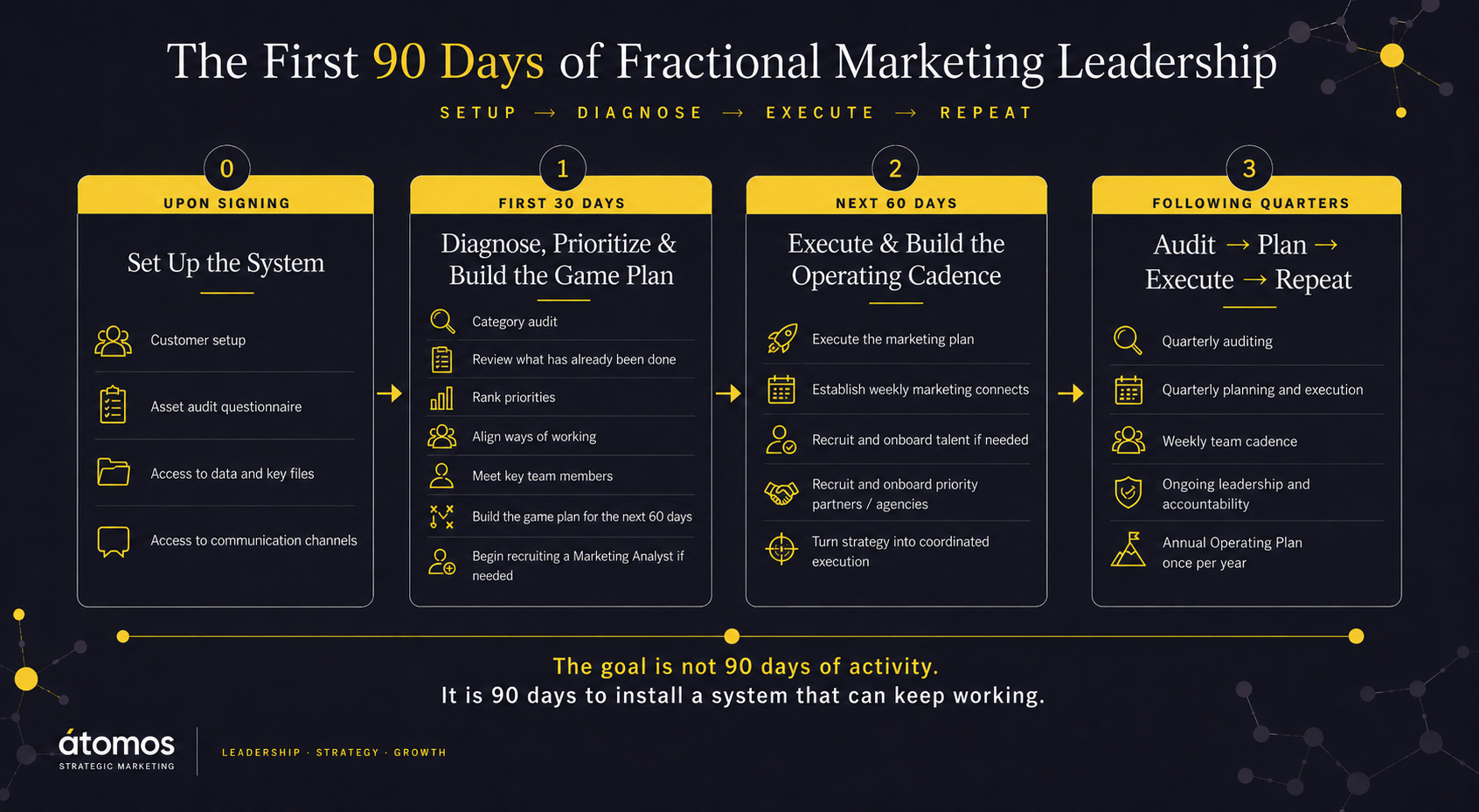
Upon signing: Set up the system. Complete the asset audit, secure access to the data room, key files, and team communication channels, and create the visibility needed to understand how the business is operating today.
First 30 days: Diagnose, prioritize, and build the game plan. Audit the category and past marketing work, meet with key team members, rank the priorities, align ways of working, and develop the game plan for the next 60 days. If the business needs additional internal capability, this is also when the role and recruiting process can begin.
Next 60 days: Execute and build the operating cadence. Put the marketing plan into motion, establish a weekly rhythm for marketing decisions and execution, and recruit or onboard the talent and priority partners needed to support the work. The goal is not to add activity. It is to make sure the right work is moving with clear ownership and direction.
Following quarters: Audit, plan, execute, repeat. Once the system is in place, the work moves into a recurring quarterly cadence of auditing, planning, and execution, supported by regular team 1:1s and an Annual Operating Plan once a year. The quarter becomes the operating unit that keeps strategy connected to what is actually happening in market.
Quarterly Planning Keeps Speed From Becoming Drift
Every quarter, leadership should force the same questions: What changed? What did we learn? What is the biggest constraint now? What are we prioritizing? What are we stopping? What earned more resources? And what metric should move if we are right?
Without that last question, “we are moving fast” and “we keep changing our minds” start to look the same. To the team doing the work, they feel the same too: exhausting, reactive, and hard to build on.
The lesson is not to slow down. It is to put growth decisions in the right order — and earn the right to scale each next layer.
That filter can be worth more than another campaign.
Most emerging CPG and Food & Beverage brands do not have an activity problem. They have a sequencing problem: real traction, real pressure to move, and not yet enough structure to ensure that the next dollar, door, hire, or channel compounds the same strategic bet.
The lesson is not to slow down. It is to earn the right to scale.
Get the sequence right: clarity first, activation second, evidence third, scale fourth. Then let every new dollar, retailer, hire, and channel reinforce what the business has learned. That is how you earn the right to scale.
Most emerging CPG and Food & Beverage brands do not have an activity problem. They have a sequencing problem: real traction, real pressure to move, and not yet enough structure to make that movement compound instead of fragment.
They do not need less speed. They need a system that makes speed useful.
Build the clarity first. Then let every new dollar, retailer, hire, and channel reinforce the same bet. That is how you earn the right to scale.
-
No. The point is sequence, not caution. Move as fast as the business requires, but make sure the consumer, positioning, message, growth priority, and measurement are clear enough to guide that speed.
-
At minimum: the priority consumer, the positioning the brand wants to own, the core message, the business constraint marketing is solving, and the metric that should move if the bet is right
-
Because the first 90 days create the bridge from diagnosis to execution. The engagement begins with setup and access, moves through a first-30-day audit and priority-setting period, then uses the next 60 days to execute the plan, build capability, and establish the weekly operating cadence. From there, the business moves into recurring quarterly auditing, planning, and execution.
-
When additional spend, channels, partners, or distribution will reinforce a clear strategy instead of creating new interpretations of it — and when the team knows what business metric should improve if the strategy is right.
-
No. Distribution creates availability. Demand shows up in shopper choice, velocity, repeat, and the economics of keeping the product productive on shelf. A brand can add doors faster than it adds consumer pull.
ÁTOMOS — FRACTIONAL CMO FOR FOOD & BEVERAGE
We bring big-CPG playbooks to growing food and beverage brands.
We embed inside your business, read your category the way large CPG does, and help you move with clarity and speed — without the full-time cost.
→ Let's talk: atomos.us/contact