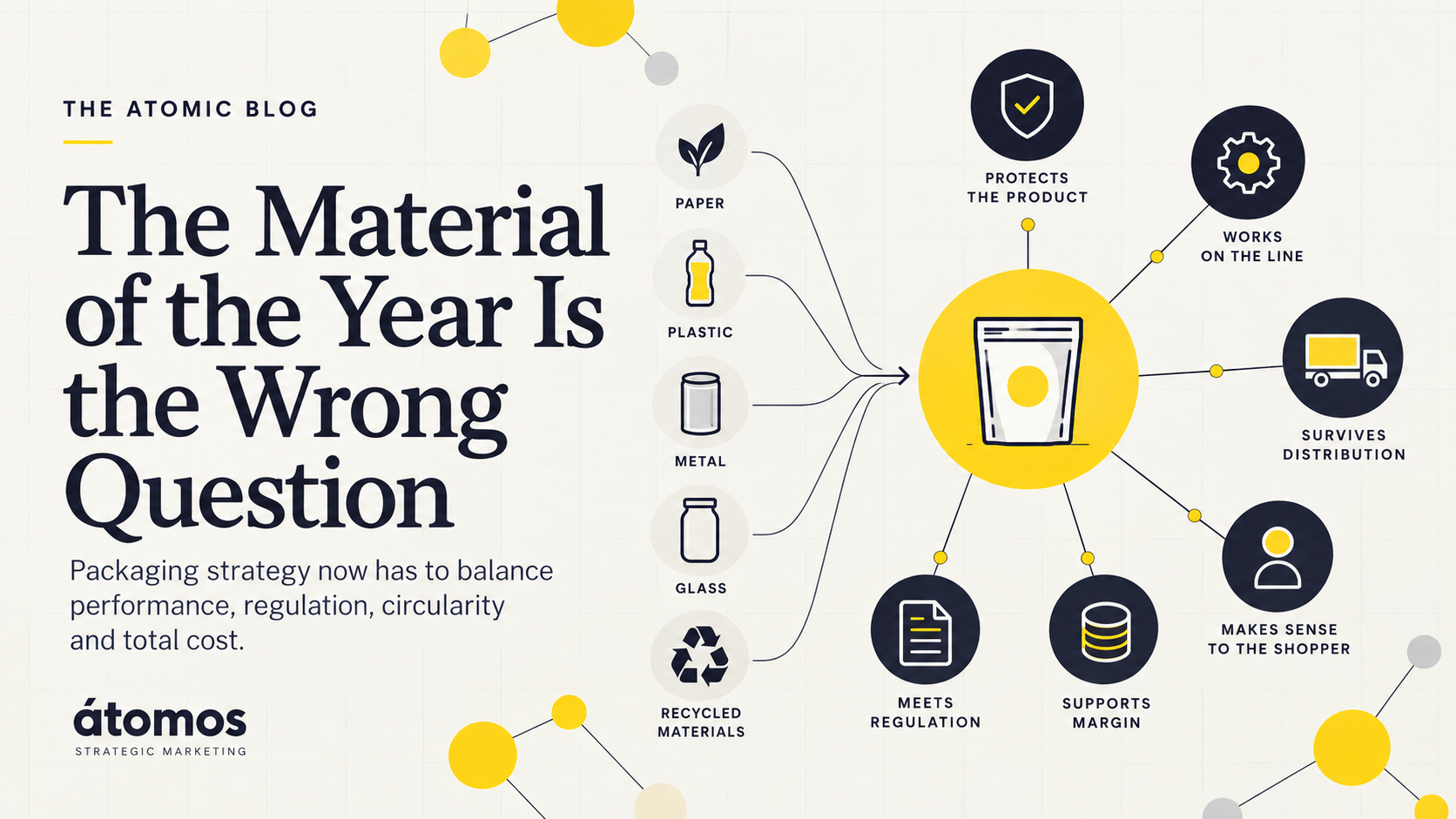
Most packaging conversations still start with a material: paper or plastic, virgin or recycled, rigid or flexible.
But that is becoming the least interesting part of the decision.
A package can look more sustainable and still be a worse business choice if it shortens shelf life, creates production issues, increases freight, is difficult to recover where it is sold, or makes a claim the brand cannot defend.
That is the shift Food & Beverage leaders should be paying attention to in 2026. Packaging is no longer just a design or procurement decision. It increasingly sits at the intersection of consumer expectations, operations, regulation, innovation and cost.
The brands that get this right will not be the ones that find one “material of the future.” They will be the ones that understand what each package needs to do and make the tradeoffs deliberately.
The Better Question Is: What Does the Package Need to Do?
Consumers are a good reminder of why this matters. McKinsey’s 2025 global packaging research found that price and perceived quality still matter more in purchase decisions than environmental impact. In the U.S., food safety and shelf life remain among the most important things consumers expect packaging to deliver.
Sustainability did not replace those expectations. It was added to them.
That means a more sustainable-looking package is not automatically a better package. It still has to protect the product, work on the line, survive distribution, make sense to the shopper and fit the economics of the business
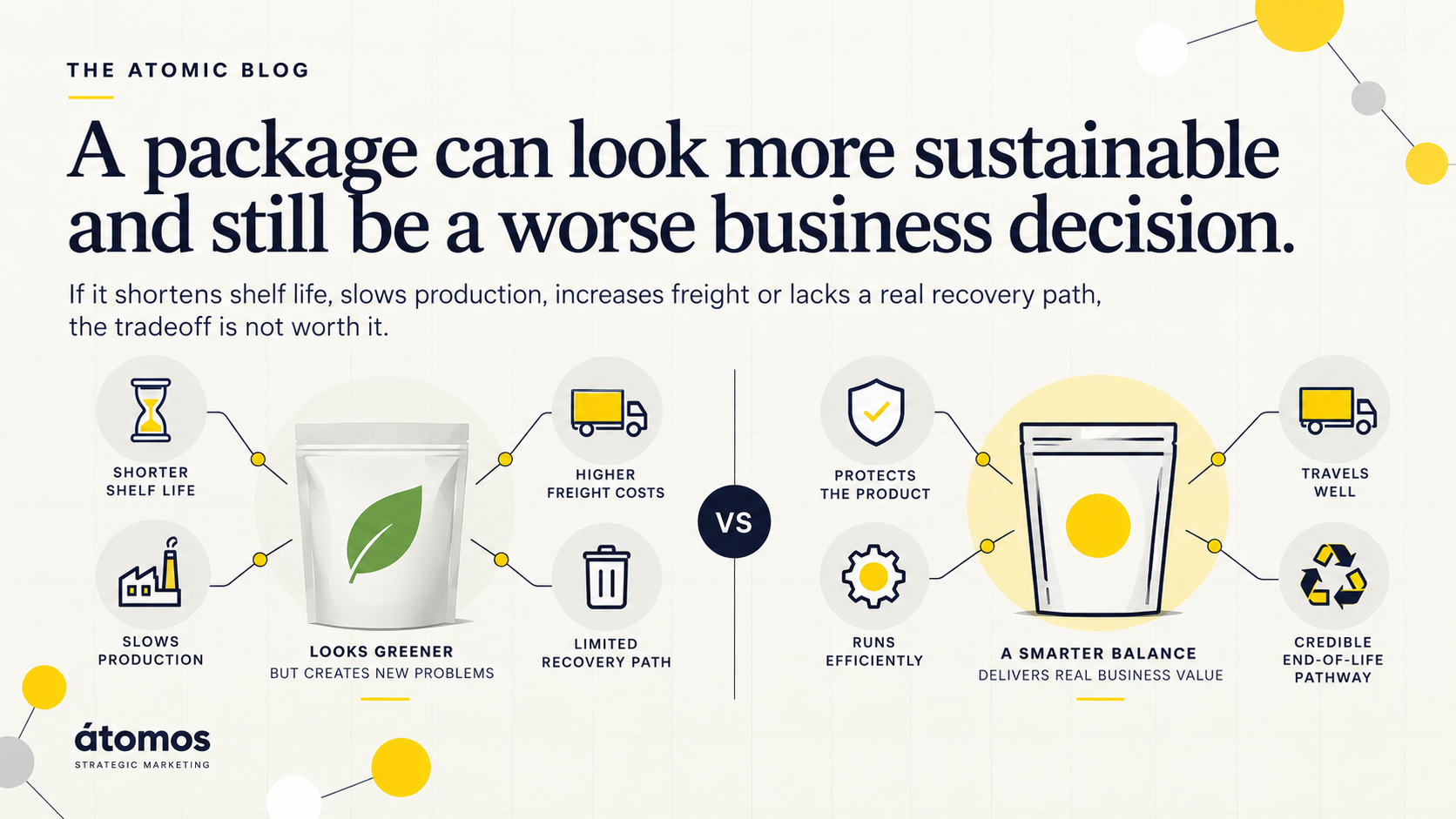
So instead of starting with “paper or plastic?”, the more useful question is:
What does this package need to do for this product, in this market, and what is the simplest system that can do that job well?
That sounds obvious. In practice, it changes the conversation completely.
Three Packaging Shifts Worth Watching
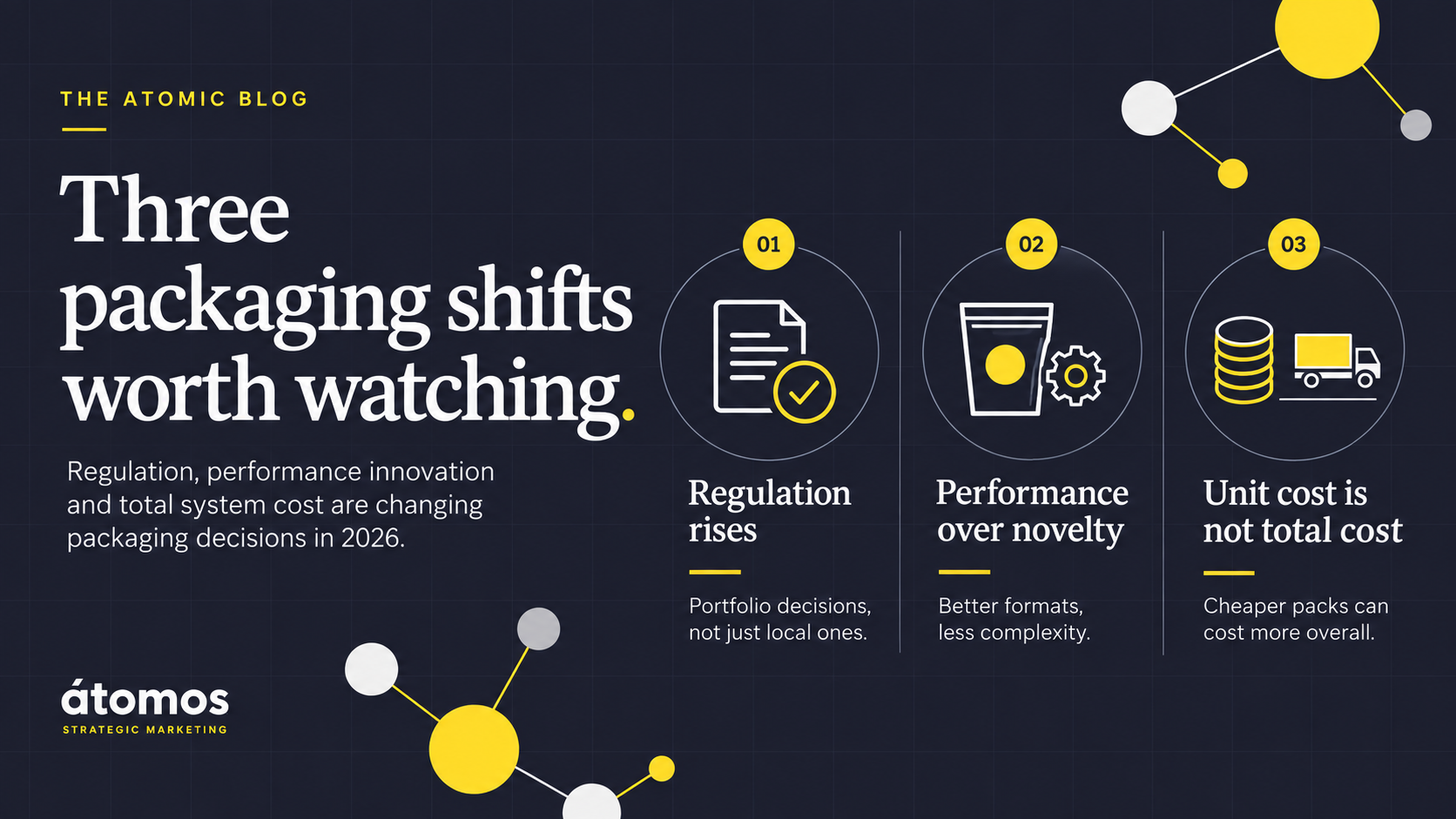
There is a lot happening in packaging right now, but most leadership teams do not need a technical briefing on every new material or regulation. They need to know which shifts are likely to change decisions.
1. Regulation is moving packaging higher up the agenda.
Europe is moving through a more harmonized packaging framework, while the U.S. remains more fragmented, with requirements expanding state by state. For brands selling across markets, packaging choices increasingly affect claims, recyclability requirements, producer responsibility and the cost of maintaining different versions of the same pack.
The implication is simple: packaging decisions that used to feel local or tactical can become portfolio decisions as a brand scales.
2. Innovation is moving from “new material” to better performance.
Some of the most important progress is not about replacing one material with another. It is about making familiar formats perform better with less complexity.
Mono-material structures, lighter packaging, improved barriers, fiber-based formats and recycled-content systems are all trying to solve the same tension: reduce environmental impact without giving up the protection and performance the product needs.
Smart packaging belongs in the same conversation. QR codes, RFID and freshness indicators can create value, but only when they solve a real consumer or operational problem. Technology on pack is not automatically innovation
3. The cheapest package is not always the lowest-cost package.
Packaging quotes make it easy to compare unit costs. They make it harder to see everything else.
A lower-cost material can become expensive if it slows production, increases damage, reduces shelf life or raises freight. A higher-cost option can create value if it protects product, runs well on existing equipment and reduces waste elsewhere.
The better question is not simply, “What does the package cost?”
It is, “What does this packaging decision cost the business once the full system is considered?”
What Growth-Stage Brands Should Actually Do
For a growth-stage CPG brand, the answer is not to chase every packaging trend.
It is to know enough about the portfolio to make better choices when a decision comes up.
Start with the basics. Know what your highest-volume packages are made of, what claims you are making, where those packages are sold and whether the end-of-life story on pack matches what can realistically happen in those markets.
Then protect the fundamentals. Do not reduce material at the expense of shelf life. Do not add technology without a clear use case. Do not make a sustainability claim because it sounds good before checking whether the brand can substantiate it.
And do not evaluate packaging in isolation from the rest of the business.
A packaging change can affect consumer perception, manufacturing, logistics, retailer requirements, sustainability goals and margin at the same time. That is why the decision deserves more than a material comparison or a design review.
A Simple Packaging Decision Framework
Before approving a meaningful packaging change, I would want the team to answer five questions:
• Protect — Does it protect the product and preserve shelf life?
• Minimize — Are we using only the material and complexity the job requires?
• Recover — Is there a credible recovery or recycling pathway where the product is actually sold?
• Prove — Can we substantiate the claims we are making?
• Connect — If we add a digital layer, does it solve a measurable problem?
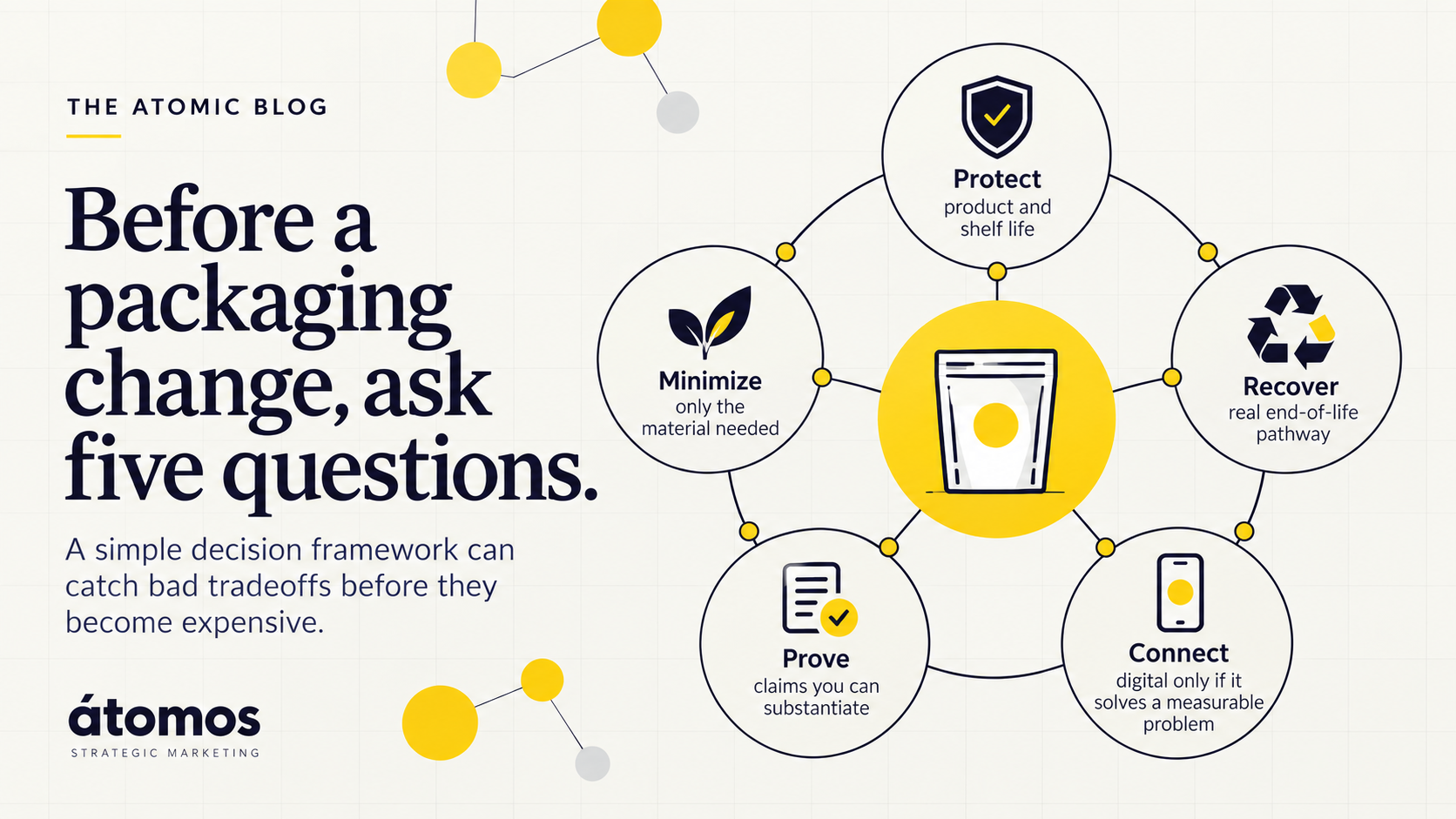
That is enough to catch a surprising number of bad decisions early.
A package does not need to be perfect on every dimension. But the team should understand the tradeoff it is making rather than optimizing one variable and discovering the downside later.
What Changes Between Now and 2030
The direction of travel is becoming clearer.
Brands will face more pressure to reduce unnecessary material, use recycled or renewable inputs where they make sense, improve recyclability, support reuse in the right systems and substantiate environmental claims more carefully.
At the same time, packaging still has to do its oldest job: protect the product.
That is why I do not think the winning packaging portfolios of 2030 will be defined by one material. They will be defined by better decisions about where different materials, formats and technologies actually make sense.
The Material Is an Input. The System Is the Strategy.
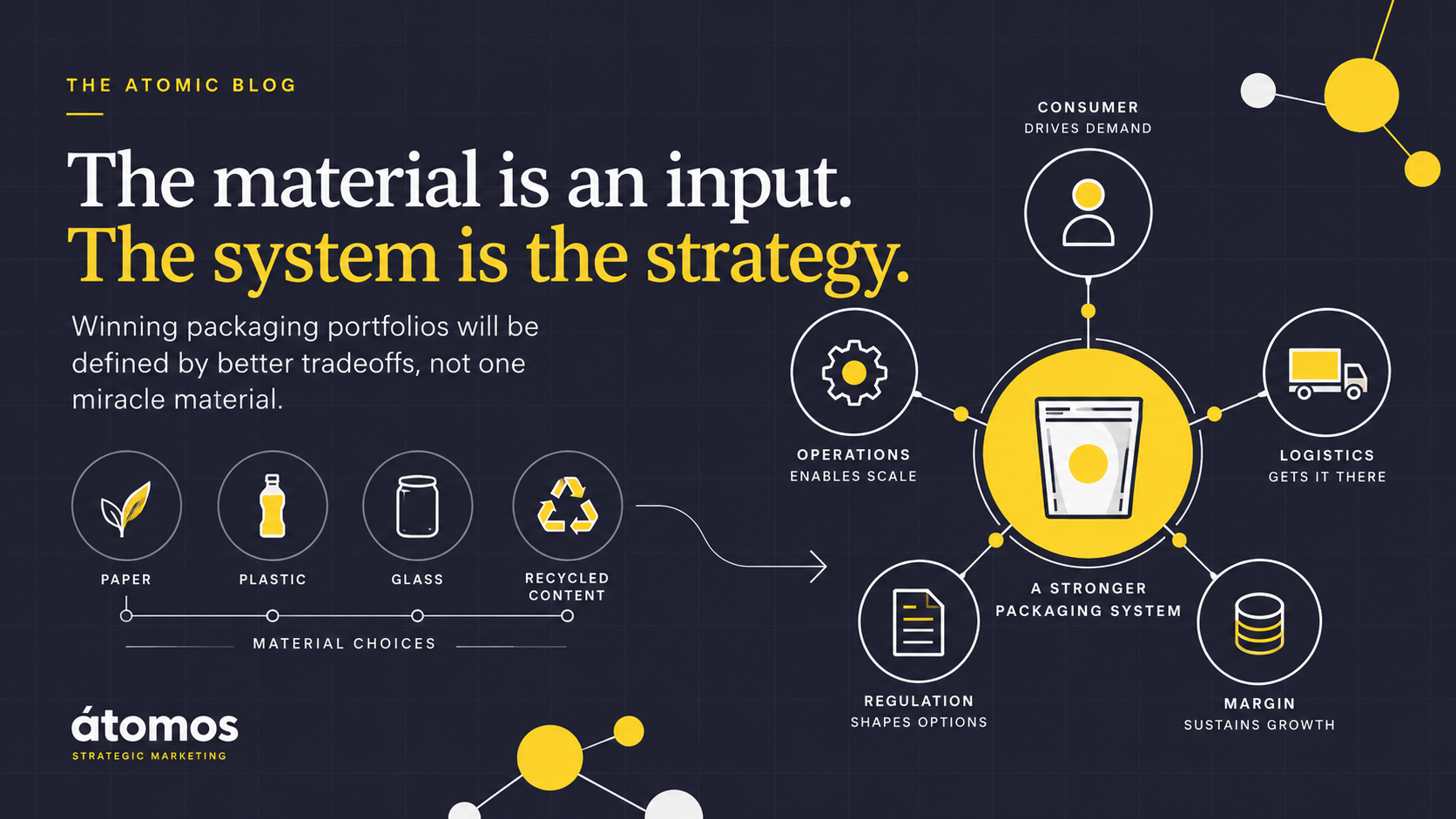
Packaging is becoming one of those decisions where strategy, consumer, operations and growth have to be in the same room.
For growth-stage Food & Beverage brands, that is the real trend to watch.
The goal is not to know every new coating, regulation or recycling technology. It is to know enough to ask better questions before a packaging decision becomes expensive, difficult to reverse or limiting to growth.
The material of the year is the wrong question.
The better question is whether the package works for the product, the consumer and the business at the same time.
ÁTOMOS — FRACTIONAL CMO FOR FOOD & BEVERAGE
We bring big-CPG playbooks to growing food and beverage brands.
We embed inside your business, read your category the way large CPG does, and help you move with clarity and speed — without the full-time cost.
→ Let's talk: atomos.us/contact
-
The biggest shift is not one material. Packaging is becoming a broader business decision that has to balance product protection, sustainability, regulation, consumer usability and cost at the same time.
-
Not automatically. The better option depends on the product, the amount of material used, manufacturing and logistics, shelf-life performance and whether the package can realistically be recovered where it is sold.
-
The most relevant shifts are simpler and more recyclable structures, recycled and renewable content, stronger environmental-claim requirements, smart packaging with a clear value case and greater focus on total system cost.
-
When it solves a measurable problem. Freshness, traceability, recall management, authentication or reusable-asset tracking can create value in the right category. Adding technology without a clear consumer or operational use case usually does not.