Outside the store, London eats globally.
I recently spent time around Fulham and Parsons Green looking at retail and culinary trends the way I usually do: not only at what is on shelf, but at what people are eating around it. Within a few blocks you can move from Thai to Lebanese, Persian, Greek or Italian food, pass American fast food, and still end the day at a traditional pub.

None of that feels unusual. For many consumers, these cuisines are already part of the weekly repertoire.
Then you walk into grocery retail and, in some stores, many of those same foods are still grouped under a “Taste of the World” or “world food” logic.
That contrast kept bothering me.
If the cuisine is already familiar outside the store, when does organizing it by nationality stop helping discovery and start limiting growth?
I am not arguing that the global aisle is always wrong. For unfamiliar products, emerging cuisines or shoppers who want a destination for discovery, it can be useful. My point is that the shelf should evolve as the consumer behavior matures.
The shelf is not neutral
Placement does more than tell a shopper where to find something. It also frames how the product is understood.
The shelf determines what the product sits next to, which brands it gets compared with, what price points feel normal and which occasions come to mind. It can signal “everyday staple,” “specialty item,” “premium treat,” “health solution” or “something from another cuisine.”
That makes shelf architecture a growth decision for both retailers and brands. For retailers, the opportunity is category development: helping more shoppers understand the set, discover relevant products and bring new occasions into the basket. For brands, the opportunity is to compete in the context where the shopper is already making the decision, rather than remaining isolated inside a niche destination.
A separate world-food destination can give an unfamiliar category visibility and context. But once a cuisine is established, the same separation can become a ceiling. The product may be easy to find for someone already looking for it, yet remain disconnected from the meal, category or occasion where a broader group of shoppers would naturally consider it.
In other words, the aisle can help you get discovered and still make it harder to become habitual.
A better question: how mature is the behavior?
Rather than asking whether global foods belong in one aisle or another, I think retailers and brands should start with a different question: how mature is the consumer behavior around this cuisine or product?
For an emerging behavior, an origin-led destination can be helpful. The shopper may need context, education and a clear place to explore.
For a transitioning behavior, dual placement or strong adjacency may make more sense. The product still benefits from cultural context, but it also needs to show up where the meal or use occasion happens.
For an embedded behavior, category and meal logic should probably carry more weight than nationality. At that point, the shopper already knows what the product is. The job of the shelf is to make the decision easier, not to keep explaining where it came from.
That maturity lens matters because different cuisines can be at very different stages in the same market.
Consumers shop meals, not maps
Pasta is an easy example.
Yes, pasta is Italian in origin. But in many households it behaves like a staple. The shopper is not necessarily thinking, “I want Italian food.” They are thinking about dinner, what sauce they have, what the kids will eat or what can be made quickly.
That is why the natural adjacency between pasta and tomato sauce makes sense. The shelf is organized around the meal.
The same thing becomes even clearer online. Search removes the physical aisle, and shoppers tend to move directly toward the product or use they already understand.
The spice shelf offers another useful contrast. In a multicultural market, one spice set can reflect dozens of culinary traditions at once. We do not need a separate “global spice” destination for every origin. The products sit together because the shopper understands the job: season the food. Recipes, pairings and adjacent merchandising can do the cultural education.
The organizing principle is usage, not geography.
That is the shift I find interesting. Shoppers often navigate food by recipe, craving, occasion, familiarity and function. When the shelf follows those cues, the decision becomes easier.
Mexican food in the UK shows what “emerging” can look like
Mexican food gave me a useful counterpoint because, in the stores I visited, it did not feel as embedded in the everyday repertoire as some other cuisines.
The retail set was comparatively narrow, with a lot of private label and Old El Paso. Outside grocery, there are strong signals of growing familiarity, from restaurants like Wahaca to more visible taco occasions. But compared with curry, kebab, Thai or Italian, Mexican food still seems to have more work to do to build routine.
Restaurants and QSR can help close that gap. Foods that people try repeatedly out of home can become reference points for what they later want to recreate at home. A restaurant occasion can move a cuisine from unfamiliar to familiar before the shopper ever reaches the grocery shelf. Food is emotional: sometimes the driver is nostalgia, sometimes curiosity, and sometimes the desire to recreate a new experience. Retail growth can follow when the shelf makes that behavior easier to repeat at home.
That makes the growth question different.
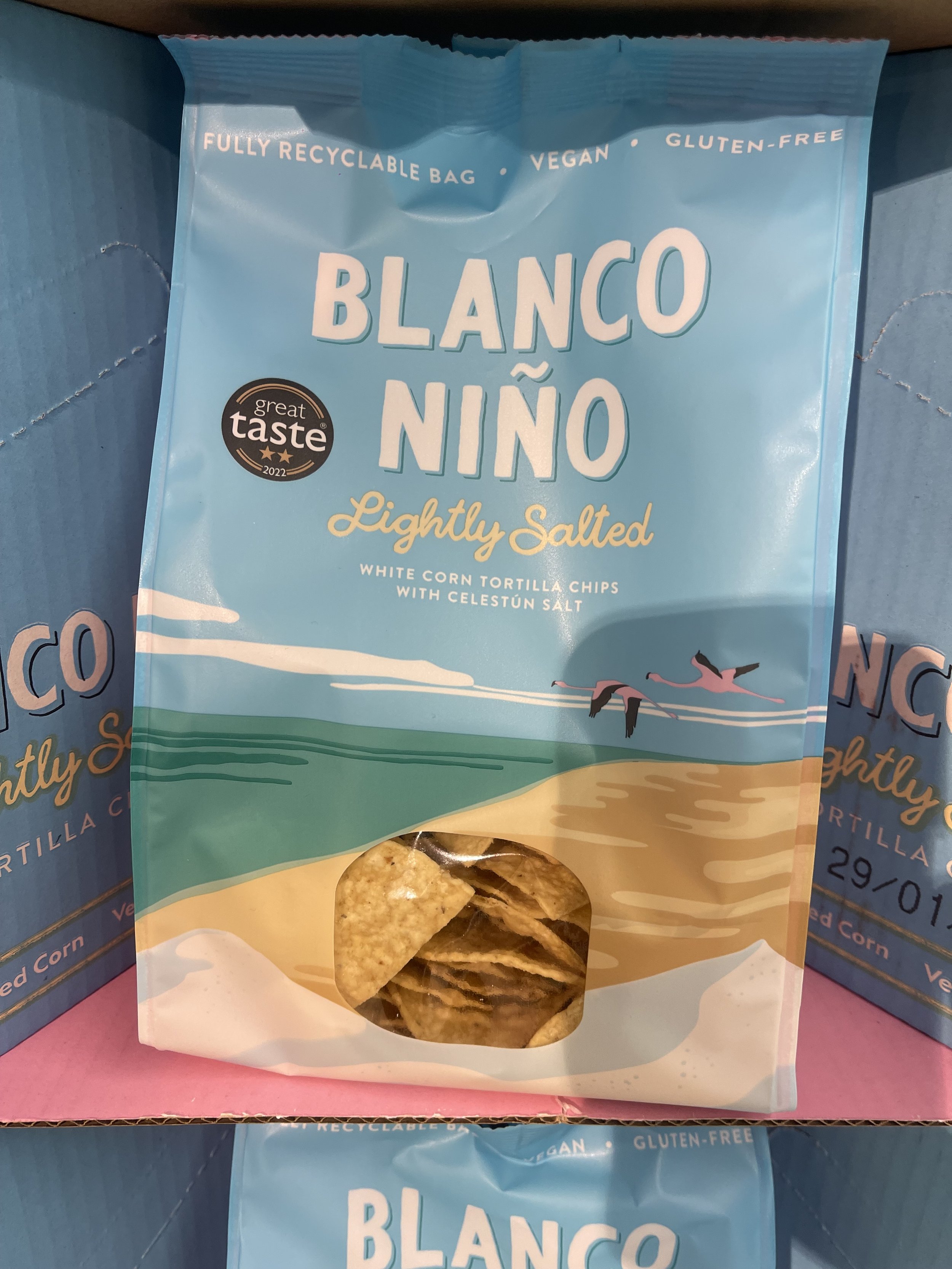
Blanco Niño is interesting because it shows one route into the mainstream: compete first in a category the shopper already understands. The product can be discovered as a premium tortilla chip in a crowded snack set without requiring the consumer to begin with a lesson in Mexican cuisine. That matters for category growth: the brand does not need the shopper to become an expert in Mexican food before it can earn trial.
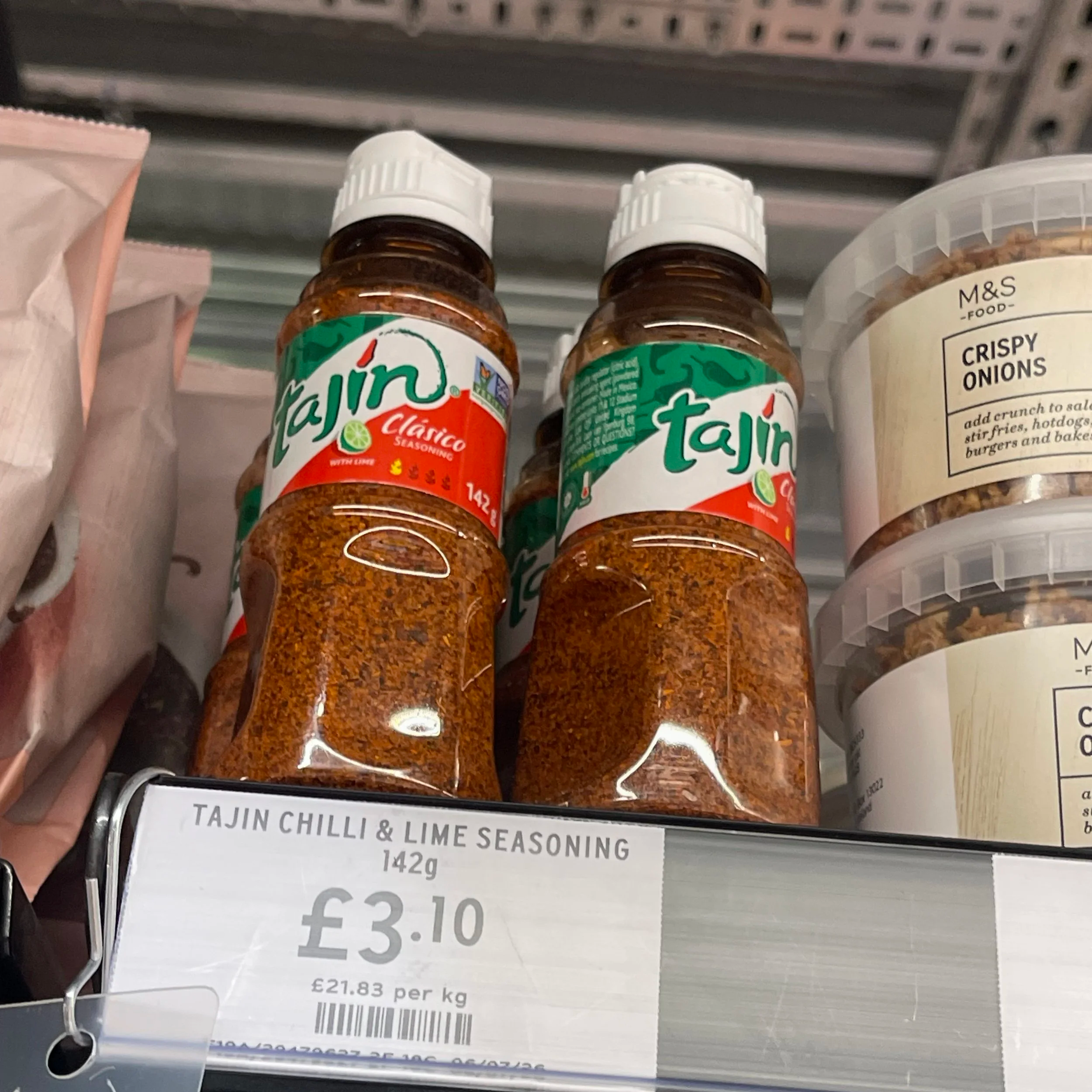
Tajín shows another challenge. In the U.S., I have watched the product become easier for mainstream shoppers to understand as usage occasions became more visible: fruit, snacks, drinks, rims. In the UK, I still saw more of a translation gap. What is it? What do I put it on? When would I use it?
That is not only a distribution problem. It is an occasion-building problem.
And there are clues in adjacent behavior. I kept seeing spicy margaritas on menus in London. That does not prove a market for every Mexican product, but it does tell you that spice, citrus and salt already have a familiar occasion the consumer enjoys.
The opportunity for a brand may be to connect to that behavior rather than simply ask for more space in a global aisle.
Mainstreaming does not mean erasing origin
There is an important distinction here.
Moving a product toward mainstream category logic does not mean removing its culture, heritage or provenance. Those can be powerful sources of differentiation.
The question is whether origin should be the only way the shopper is asked to understand the product.
A brand can be proudly Mexican, Lebanese, Indian or Japanese and still compete on the snack shelf, in sauces, in prepared meals or wherever the consumer naturally solves the occasion. Heritage can make the proposition more distinctive while category placement makes it easier to buy.
The best outcome is not cultural flattening. It is making the product legible in the context where the consumer is already making a decision.
Other London examples point to the same principle
I saw the same idea from a different angle in brands that already have strong familiarity.
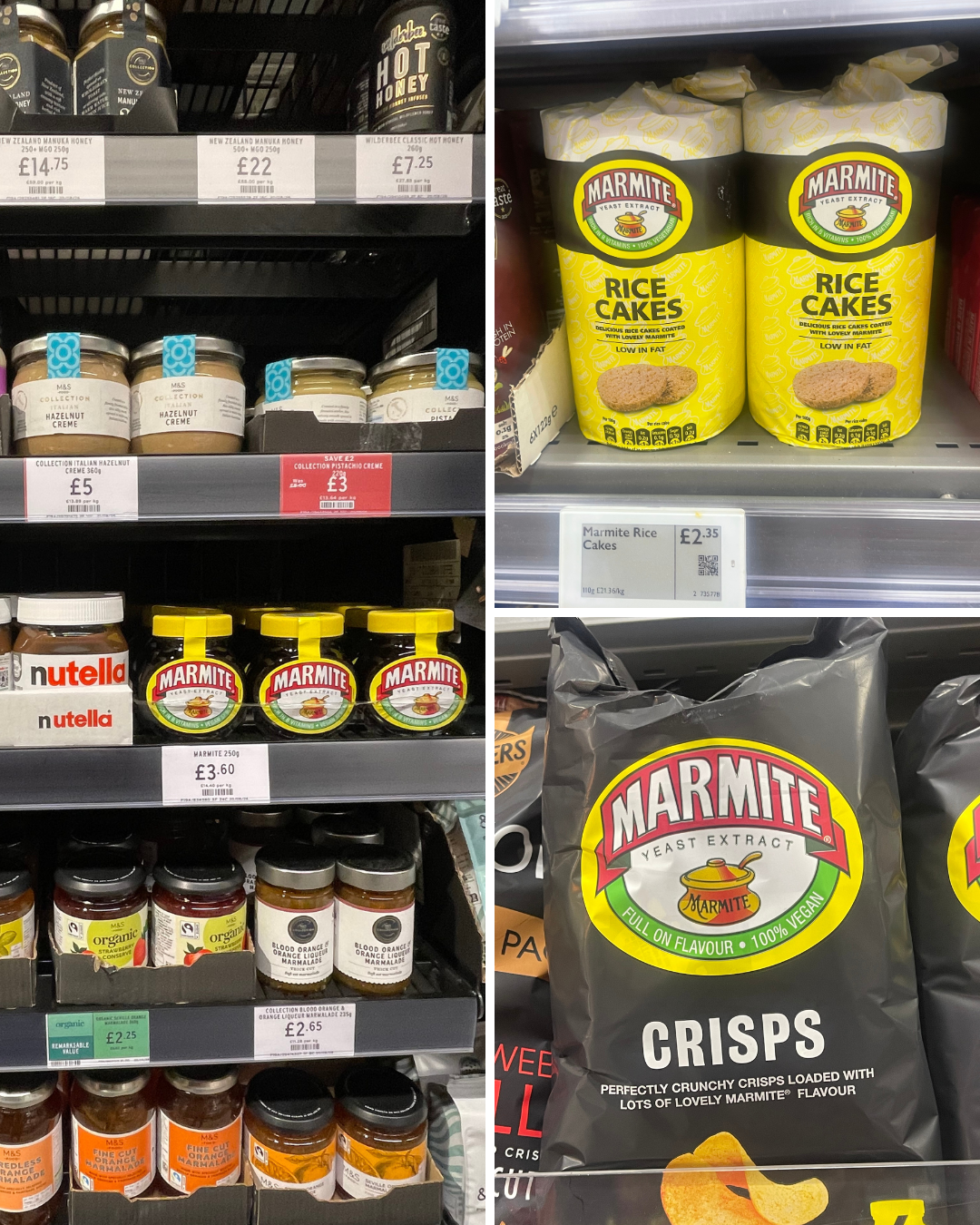
Marmite has stretched beyond the jar into prepared food and snacks while keeping a very recognizable brand and flavor cue. I tried one of the sandwich collaborations, and it still felt unmistakably Marmite.
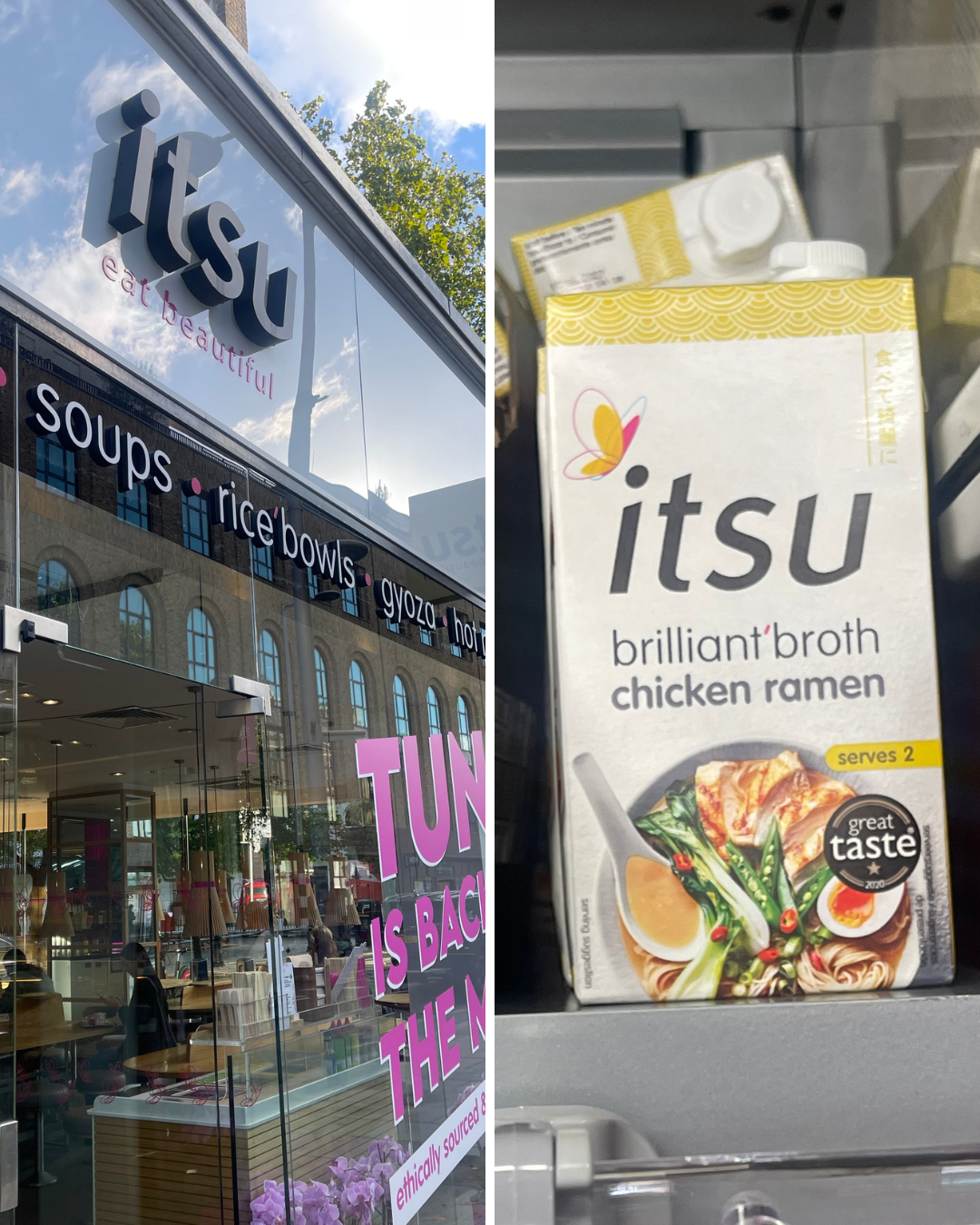
Restaurant brands offer another version. Itsu has carried a recognizable convenience-led experience into retail products, while Gymkhana brings a more premium restaurant world into packaged food.
These are different businesses, but the common thread is useful: the shopper does not have to relearn the brand from zero. The experience, occasion or equity travels with the product.
That is what shelf strategy should help reinforce.
What retailers and brands should rethink
For retailers, I would start by auditing which “world food” sets still reflect current shopper behavior and which ones reflect legacy taxonomy.
Three questions are useful:
• Is the shopper looking for this product by origin, by category or by meal?
• Is the current placement helping discovery, or isolating the product from the comparison set that could drive growth?
• Has the cuisine moved from emerging to transitioning to embedded, and should the shelf move with it?
That does not require one answer for every store. Neighborhood and shopper mix matter. A destination that is useful in one catchment may feel outdated in another.
For brands, the shelf question should be part of market-entry strategy, not something decided after positioning is finished.
Ask:
• What does the shopper already understand about this product?
• What do we still need to teach: what it is, how to use it or when to use it?
• Which category do we ultimately want to be compared against?
• What occasion could move the product from “interesting” to routine?
Those questions change how you think about distribution, education, packaging, retailer storytelling and even innovation.
Culinary marketing starts with the plate, not the planogram
A category lens tells you where a product is currently shelved.
A culinary lens asks a different set of questions: What meal is it part of? What craving does it answer? What does it replace? What does it pair with? What behavior needs to become familiar before repeat becomes natural?
That is where I think a lot of the growth opportunity sits.
The most useful retail question is not simply, “Where does this product belong?”
It is, “How does the consumer already make sense of it — and is the shelf helping that behavior grow?”
At átomos, this is the lens we bring to growth-stage CPG and Food & Beverage brands: connecting consumer behavior, category strategy and commercial execution so retailers can build categories and brands can move from discovery to repeat in ways that reflect how people actually eat.
ÁTOMOS — FRACTIONAL CMO FOR FOOD & BEVERAGE
We bring big-CPG playbooks to growing food and beverage brands.
We embed inside your business, read your category the way large CPG does, and help you move with clarity and speed — without the full-time cost.
→ Let's talk: atomos.us/contact
-
Sometimes. For emerging cuisines or unfamiliar products, a dedicated destination can improve discovery and provide useful context. The issue is whether that structure continues to serve shoppers once the cuisine becomes part of everyday behavior.
-
It can separate a product from the meal or category where shoppers would naturally compare it, reinforce a niche perception and limit exposure to consumers who are not already shopping the global-food set.
-
There is no single threshold. Look for signs that shoppers already understand the product, use it routinely and navigate it by category, meal or occasion rather than by origin alone. Dual placement can also be useful during the transition.
-
Usually one of three things: what the product is, how to use it or when to use it. Distribution without that usage translation can create availability without habit.
-
Culinary marketing starts from how people cook, eat, drink and socialize — the meals, flavors, occasions and pairings that shape behavior — rather than looking only at product features or category definitions.